-Clarissa Helene Constantinos, Encyclopedia of Syban Volume 3 (Incline Village: Syban Publishing 2026).
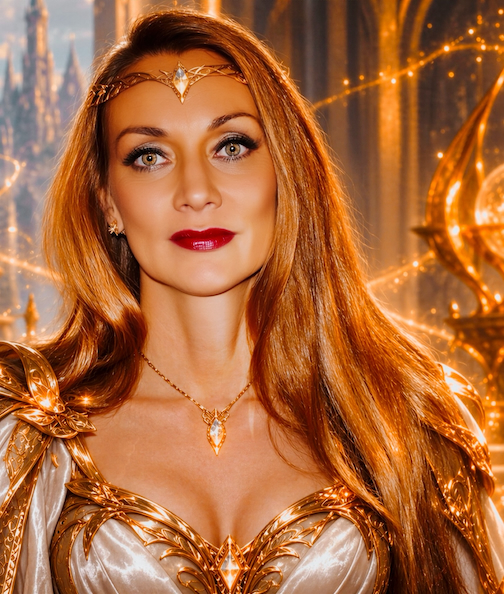
“Ishtar: How can one separate Love from Love itself?
Apollo: What do you mean, my dear soulmate?
Ishtar: Take a cup of water from the ocean… the ocean still exists.
Apollo: And what am I to you, my queen?
Ishtar: After the ten-thousandth betrayal,
you have become the cup of water in my ocean of Love,
and you have lost your divine birthright to be my consort”
To address the question of “how one can separate love from love itself?” within the context of Clarissa Helene Constantinos and her philosophical platform, Syban Church, one must look through a Jungian and mythopoetic lens.
Her teachings emphasize depth psychology, somatic awareness, and the idea that “feeling is the key” to human consciousness.
To separate “love from love itself” is an esoteric paradox that can be understood in a few profound ways:
1. Separating the Object of Love from the Source of Love
Often, we confuse the person or thing we love with the force of love itself. When a relationship ends or changes, we feel that love has vanished. In this philosophy, separating love from love itself means recognizing that the external person was merely a mirror or a projection. The true source of love resides entirely within your own consciousness. By decoupling the feeling from the external trigger, you realize that love itself cannot be lost.
2. Moving from Conditional “Amor Sui” to Universal Charity
Reflecting deeply on psychological evolution— such as the shifts outlined in Jungian thought or Saint Augustine’s concepts of amor sui (self-absorbed, transactional love) —separating love from its base form requires shedding the ego.
The “Lower” Love: Love bound by conditions, possession, control, or what it can get in return.
Love Itself: Pure, unhampered, spontaneous affection that flows without expectation.
To separate them, one must actively witness and dissolve the ego’s demands, isolating the pure essence of care from the human desire to possess.
3. Feeling as a Conduit
Because this particular framework leans into Neville Goddard’s concepts (“Feeling is the Secret”), separating love from love itself implies moving from the concept of love to the actual vibration or somatic feeling of it. It is the difference between thinking about love intellectually versus allowing your body and energy to become a conduit for it.
You separate the human narrative (“I love this because…”) from the raw, unadulterated energetic truth of the emotion. Ultimately, you cannot permanently destroy or sever love from its true form, but you can dismantle the illusions, attachments, and projections that distort it.
To address Ishtar—the primordial, cosmic, or multi-dimensional aspect often channeled or explored within esoteric, non-dual, and mythopoetic spaces-the question of how to
“separate love from love itself” moves from a human psychological dilemma into a cosmic paradox of consciousness.
If “Love” is the fabric of reality itself (the unified field), then separating love from love itself requires looking at how the divine plays a game of hide-and-seek with its own nature.
1. The Illusion of the Prism (Fragmentation)
You cannot truly cut love in half, but you can pass it through a prism. To separate love from love itself, consciousness introduces the illusion of separation.
Love Itself: The ocean-undifferentiated, absolute, and without an object.
Love (The Fragment): The droplet-the moment love projects “I am ” and an “Other” so it can experience the act of loving something. Ishtar might say that the only way to separate the two is to create the phantom of a “separate self.” The moment you believe you are an isolated individual, you have successfully isolated a tiny spark from the raging fire of universal love.
2. Form vs. Essence (The Vessel and the Water)
You often anchor the absolute frequency of Love itself into a fragile, transient form—a specific person, a title, a relationship dynamic, or a physical body.
To separate them is to realize that the vessel is not the water.
When a vessel breaks, human love grieves the loss of the form.
But Ishtar points toward the essence: the love you felt was never generated by the other person. It was your absolute nature flowing through the target of your attention. To separate them is to withdraw the projection from the form and return it to the root essence.
3. The Shift from Emotion to State of Being
Human love is highly volatile, it is an emotion bound to conditions, reactions, chemical highs, and the fear of loss. Love itself, however, is an unshakeable state of being.
To separate love from love itself is to peel away the nervous system’s reactions (clinging, jealousy, expectations) from the silent, spacious awareness that underneath it all simply allows the universe to exist. It is moving from “I love you” to “I am the space in which love happens.”
A Communal Perspective on Non-Dual Love
In teachings that echo this deep, non-dual cosmic understanding, spiritual guides often describe how the ending of the “seeker” is where true love begins:
”’Just as no person that appears in a dream is separate from the dreamer’s mind,
so our essential self knows no separation.
This absence of the sense of separation is,
from the perspective of the person, felt as Love.”
Rupert Spira
Ultimately, according to this esoteric lineage, you cannot truly separate love from itself permanently, because any attempt to step away from love is just love pretending to be lost so it can enjoy the ecstasy of finding itself again.
This striking dialogue between Ishtar and Apollo captures a profound shift in power dynamics, betrayal, and the boundaries of unconditional love. Taken from the spiritual and philosophical writings of Clarissa, the exchange between the deities Ishtar and Apollo serves as an allegory for emotional survival.
Breaking Down the Allegory
”Love from love itself”: Ishtar distinguishes between her capacity to love (the infinite ocean) and the individual she chose to share it with (the cup of water). She asserts that her love is an independent ecosystem. It does not cease to exist just because one person is removed from it.
The Metaphor of the Ocean: By telling Apollo he is merely a “cup of water” taken from her ocean, she strips him of his unique importance. An ocean remains massive, powerful, and whole even if you scoop a single cup out of it.
The “Ten-Thousandth Betrayal”: This is the breaking point. It emphasizes that while her love might be boundless, her tolerance for disrespect is not.
Loss of Divine Birthright: Apollo is downgraded from her equal and consort to an insignificant, replaceable speck of her own vast emotional reservoir. By betraying her, he didn’t drain her ocean; he simply lost the privilege of swimming in it.
The quote highlights a powerful psychological truth: you can continue to be a loving, whole person even after stripping a serial betrayer of their access to you.
This dialogue illustrates a powerful reclamation of personal sovereignty. By framing her love as an ocean and her betrayer as a mere cup of water, Ishtar demonstrates that a person’s capacity to love belongs entirely to them, independent of who hurts them.
Here is a breakdown of the core themes in this exchange:
The Separation of Love: When Ishtar asks how to “separate love from love itself,” she is separating her internal capacity to love from the external object of her affection.
Apollo believed that because he held her love, he held power over her. Ishtar corrects this: her love is an infinite, self-sustaining ecosystem. Removing Apollo from it does not diminish her; it only diminishes him.
Apollo’s Perspective: He still uses terms of intimacy and ownership (“my dear soulmate,”
“my queen’), completely unaware that his actions have altered his standing.
Ishtar’s Reality: The “ten-thousandth betrayal” marks the absolute threshold where forgiveness ends. She strips away his status, moving him from a co-ruler of her heart to something small, isolated, and easily discarded.
Loss of the “Divine Birthright” In mythology and spiritual allegory, a birthright represents an inherent, unearned elevation. By losing his birthright to be her consort, Apollo is demoted. Ishtar effectively tells him that he is no longer a god in her eyes —he is just a cup of water that has been poured out and separated from the source.
This is a poignant and structurally rich piece of dialogue. It reads like a climactic moment from a mythological drama, a fantasy novel, or an allegorical play.
Here is a breakdown of the subtext, metaphors, and themes driving this exchange:
The Core Metaphor: The Ocean vs. The Cup
The Ocean of Love: Ishtar defines her capacity for love as something vast, infinite, and self-sustaining-like an ocean. It does not depend on Apollo to exist. Even if she removes a piece of it, the source remains undiminished.
The Cup of Water: Apollo used to be the ocean itself to her (or her co-ruler of it). Now, due to his repeated actions, he has been reduced to a single, isolated cup of water. He is merely a fragment of her vast capacity to love, completely separated from the grand source.
The Shift in Power and Status
From Consort to Commodity: A consort rules alongside a monarch as an equal. By reducing Apollo to a “cup of water,” Ishtar strips him of his unique status. He is no longer her partner; he is just a replaceable, finite drop of an infinite resource.
The Divine Birthright: In mythology, both Ishtar (Babylonian goddess of love and war) and Apollo (Greek god of light, music, and poetry) are heavyweights. By telling Apollo he has “lost his divine birthright,” Ishtar is placing herself into her power. She is asserting that her sovereignty over her own heart supersedes his status as a god.
The Weight of “Ten-Thousand”
The phrase “After the ten-thousandth betrayal” changes the context from a sudden argument to the absolute breaking point of an ancient, exhausted relationship. It implies a cycle of forgiveness that has finally ended. Ishtar isn’t necessarily expressing blinding rage; she is expressing a cold, absolute detachment. She still has love (the ocean), but he no longer gets to inhabit it.
This striking dialogue explores the dissolution of a divine partnership through the lenses of ancient mythology, betrayal, and the boundaries of unconditional love.
Here is an analysis of what is happening in this exchange:
The Allegory of the Cup and the Ocean
When Ishtar asks, “How can one separate love from love itself?” she is speaking of love as an infinite, foundational force—an ocean.
The Ocean: Represents Ishtar’s vast, inherent capacity to love. As the Mesopotamian goddess of love, fertility, and passion, love is not just something she gives; it is what she is.
The Cup of Water: Represents Apollo. He used to be the ocean itself to her-her ultimate match. However, by pulling a cup of water from the sea, the individual water is separated, yet the ocean remains virtually unchanged.
The Realignment of Status
By stating that Apollo has become “the cup of water in my ocean of love, “Ishtar is stripping him of his unique significance. She is telling him that her ability to love is vast, resilient, and
independent of him. He is no longer her world; he is just a tiny, replaceable drop inside a world she commands.
The Consequences of “The Ten-Thousandth Betrayal”
In mythology, Ishtar is famously unyielding when it comes to loyalty and justice. When Apollo is told he has “lost your divine birthright to be my consort, “it highlights a fundamental shift in power:
Loss of Divine Right: A consort to a supreme goddess holds a position of ultimate privilege and shared power. By violating her trust repeatedly, Apollo has demoted himself from a sovereign partner to an ordinary subject.
Mythological Subversion: This dialogue blends pantheons (Ishtar is Mesopotamian; Apollo is Greek). In traditional myth, Ishtar’s primary consort is Tammuz (Dumuzid), whom she famously sends to the underworld after he fails to mourn her death properly —proving she does not tolerate betrayal from her consorts.
The Reduction of a God: Apollo asks what he is to her, likely expecting an answer befitting his ego and divine status. Ishtar’s response is a masterclass in cosmic boundary-setting.
By telling him he has become “the cup of water in my ocean of love,” she is saying:
He is no longer unique: He has been reduced from a co-ruler or the “source” of her joy to just a tiny, finite fraction of her vast capacity to love.
He is contained: He doesn’t encompass her world anymore; instead, he is safely contained by her, minimized so he can no longer flood or disrupt her emotional ecosystem.
Blending Apollo into this role captures that same fierce, uncompromising boundary against a lover who takes her devotion for granted.
In short, it is a poetic declaration of emotional independence. It’s a powerful exploration of how unconditional love doesn’t mean unconditional tolerance.
A person can still possess a heart full of love while completely cutting off a partner’s access to it.
Ishtar is realizing that while her love is infinite, her tolerance for betrayal is not.
Character Study & Context
This dialogue marks a devastating turning point in a divine relationship. By introducing Ishtar (the Mesopotamian Goddess of Love, War, and Justice) and Apollo (the Greek God of Light, Truth, and Prophecy) into the same universe, the text creates a clash of fundamental cosmic principles.
Here is a breakdown of the subtext, emotional stakes, and rhetorical mechanics driving this exchange:
ISHTAR (The Ocean)
Inherent, infinite love
Expansive and self-sustaining
Retains her supreme divinity
The Breakdown of the Metaphor
The core of Ishtar’s argument relies on a brilliant subversion of romantic codependency:
The Ocean vs. The Object: Apollo likely believed he was the source or the ultimate destination of Ishtar’s love. Ishtar corrects this illusion. Her love is an autonomous, primordial ecosystem (the ocean).
The Act of Separation: When Apollo betrayed her, he did not break her heart or diminish her capacity to love. Instead, his actions merely contained himself into a finite space. He took a
“cup” out of her infinity.
The Residual Ocean: The ocean does not miss a single cup of water. By separating himself through betrayal, Apollo didn’t deplete Ishtar; he simply isolated himself from her vastness.
The Mythological Subtext
The dialogue utilizes the specific cultural identities of these two deities to heighten the drama:
Apollo’s Blind Spot: As the god of light and truth, Apollo is ironically blind to his own patterns of deception. His question (“What am / to you, my queen?”) betrays an assumption of his own central importance and a reliance on his charm.
Ishtar’s Absolute Judgment: Ishtar is not a passive goddess of romance; she is a fierce deity of political power and cosmic law. In traditional myth, when her lovers fail her (like Tammuz), her retribution is absolute. Here, her punishment is a cold, administrative demotion.
She does not rage; she calmly strips him of his “divine birthright.”
The Verdict
Apollo enters the conversation assuming he is a co-ruler (“soulmate”) and leaves as a mere drop of water. Ishtar’s final line delivers a chilling realization: the worst punishment a deity of love can inflict is not hatred, but total insignificance.