-Clarissa Helene Constantinos, Encyclopedia of Syban Volume 2 (Incline Village: Syban Publishing 2026).
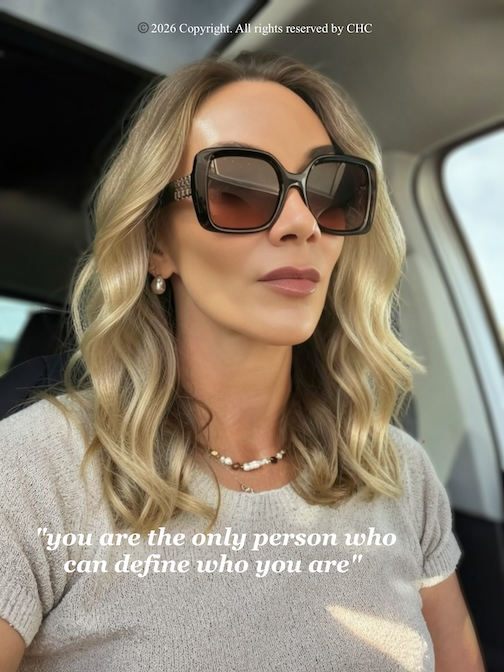
The quote, “You are the only person who can define who you are,” serves as a core Maxim in the philosophical and esoteric framework of Clarissa Helene Constantinos, the founder and primary writer behind the Syban Church.
Source and Origin
The passage is documented in Encyclopedia of Syban Volume 2 (Incline Village: Syban Publishing 2026). It is shared extensively through her digital platforms, such as her Instagram (@sybanchurch). and related social media circles.
Context within Syban Philosophy
Within the larger context of her teachings, this quote speaks to the concept of individual sovereignty and breaking free from societal constructs.
Reclaiming Identity: The text expands on the idea that people determine life rather than life determining people. It encourages seekers to reject external conditioning, rigid definitions, and judgments imposed by others.
The “False I”: Much like her other entries (such as you think because you are”), the framework centers on moving away from passive existence, thought loops, and labels, urging individuals to step into active creation.
Cosmic Neutrality: According to her teachings, pure energy operates completely devoid of human judgment or rigid definitions of “good and bad”. Because the universe is inherently neutral, the power and responsibility to define your essence rest entirely on your own inner awareness.
Why this realization changes your life
Liberation from external validation: Many people fall into the trap of seeking validation from the outside or accepting the opinions of others as the absolute truth about themselves. Defining yourself means recognizing that the most important relationship is the one you have with yourself.
Empowerment instead of powerlessness: How you think about yourself determines your actions. If you unconsciously define yourself through your mistakes or insecurities—for example, by saying, “I’m just clumsy” or “I’m not good enough for this”—you are programming yourself for failure. Consciously redefining yourself unlocks new potential.
Unlearning conditioning: From childhood, you have labels imposed upon yourself by parents, teachers, and the media. Growing up and finding oneself often means actively unlearning these external expectations in order to reveal your own authentic core.
The Philosophical Context of the Syban Church
Within the teachings of the Syban Church—documented, in particular, in works such as the *Encyclopedia of Syban Volume 2*—this quote takes on a deeper, existentialist significance:
Human Self-Determination: Constantinos often pairs this statement with the idea that it is not life that shapes the individual, but rather the individual who determines life (“It is not life that determines people, but rather that people determine life”).
Radical Sovereignty: Her philosophy places a strong emphasis on “Sacred Anarchy” and the detachment from external authorities. The goal is to unlearn societal conditioning, expectations, and learned adaptations to one’s environment in order to reveal one’s own authentic core.
The Illusion of the Mind: In her texts, she frequently distinguishes between pure consciousness and the ego. While the mind can be confused by external influences, the individual possesses the sole spiritual power to set their own direction.
How to apply this principle in your daily life
1. Pay attention to your inner dialogue: Become aware of the words you use to describe yourself. Replace self-deprecating thoughts with compassionate and empowering language.
2. Set healthy boundaries: Do not allow other people’s fears, limitations, or judgments to become your own personal vocabulary.
3. Accept your mistakes: True self-confidence does not come from being perfect, but from accepting yourself—flaws, rough edges, and all.
You are the only person who can define your own identity, your values, and your path in life.
The Significance of Self-Definition
Inner Autonomy: No one else knows your thoughts, feelings, and goals as well as you do.
Liberation from Expectations: External influences—such as family, friends, or society—often attempt to assign roles to you. You are under no obligation to accept them.
Self-Esteem: The way you speak to yourself internally shapes your self-confidence. Negative self-talk weakens you, while a conscious, appreciative attitude strengthens you.
Paths Toward Defining Your Own Identity
Reflection: Take time to examine what truly matters to you—independent of what others expect of you.
Strengthening Your Inner Voice: Reduce your reliance on external validation. True self-worth comes from within.
Setting Boundaries: Do not allow the labels or opinions of others to become your own truth.