
-Clarissa Helene Constantinos, Encyclopedia of Syban Volume 3 (Incline Village: Syban Publishing 2026).
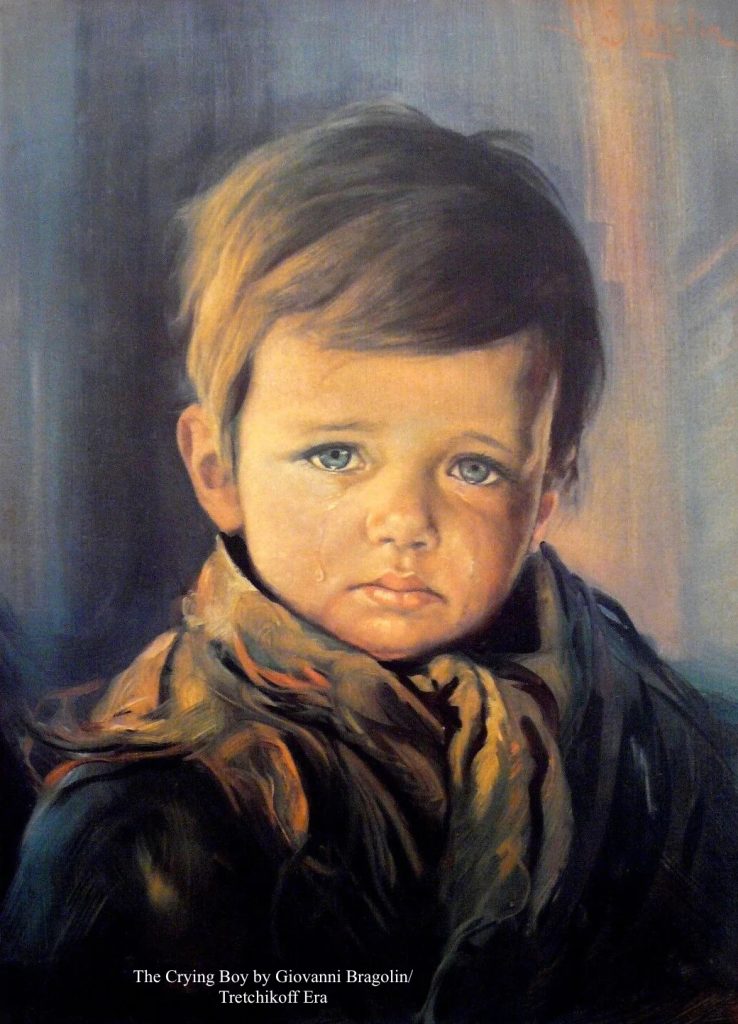
The spiritual meaning behind the concept of “weeping” in the teachings of Syban Church, founded by Clarissa Helene Constantinos, radically breaks with traditional church dogmas. Rather than interpreting tears as a sign of sin, guilt, or weakness, Constantinos’ teachings view crying as a highly liberating, spiritual act.
The spiritual meaning is divided into three central aspects:
1. Breaking emotional rigidity (Somatic Release)
In the philosophy of the Syban Church, the nervous system is considered the actual “spiritual technology” of humans. Crying is not understood here as a purely emotional reaction, but rather as a physical discharge of blocked energies. It is the moment in which the body “flows out” what the mind or social constraints have held back for years.
2. Return to energetic neutrality
Clarissa teaches: “Pure energy is devoid of any form of judgment.” When a person “cries” in the context of this philosophy, he sheds artificial spiritual hierarchies, feelings of guilt and moral judgments. The tears wash away the imposed dogmas in order to restore one’s own personal and ecological sovereignty in the midst of nature.
3. Surrender to the mystery of being
Syban Church takes a decentralized, earth-centered approach with no temples or priests. In this space, crying symbolizes the complete removal of masks and the softening of the ego before the mystery of existence. It is a state of vulnerable, unfiltered connection with the living planet, free from religious dictates.
In the teachings of Clarissa Helene Constantinos, the founder of the Syban Church, the spiritual meaning of “weeping” is centered on radical emotional release, cellular clearing, and breaking free from the past to reclaim personal sovereignty.
Her philosophy, detailed in text I.157 of the Encyclopedia of Syban Volume 2, defines the practice with the following guidance:
“Grieve, weep, and allow your heart to break
until you collapse on your knees; yet once you rise,
do not let the past block a happy future ahead”
Core Dimensions of the Meaning
Within the decentralized, dogma-free framework of the Syban Church, weeping is viewed not as a sign of weakness or divine punishment, but as an essential spiritual tool:
An Act of Unmediated Healing: Clarissa teaches that the body runs its own “spiritual operation” and holds an inherent mechanism for wholeness. Weeping is a physical expression of that operation—a natural processing system that requires no priest, institution, or formal ritual to validate it.
Honoring the Soul’s Despair: The theology acknowledges that “people no longer know who they are… and their despair resounds throughout the universe”. Crying is seen as an honest alignment with that internal truth, cutting through societal conditioning and false performance.
The Catalyst for Transformation: In this philosophical framework, a broken heart is a bridge. Collapse and grief are transient states meant to purge trauma, clearing out old attachments so that an individual can actively create their future from a place of pure, non-judgmental energy.
Spiritually, crying is viewed not as a sign or weakness, but as a sacred release, a form of non-verbal prayer, and a mechanism for internal transformation.
Key Spiritual Meanings of Crying
A Non-Verbal Form of Prayer: When words are insufficient or you do not know how to articulate your pain, tears act as a direct language of the heart that heaven hears and records.
Heart Softening and Surrender: Weeping during prayer, meditation, or worship often signifies a childlike, humble heart that has stopped pretending or performing strength, allowing deeper healing to take place.
Intercession: In many faith traditions, unexpected or deep tears during prayer are seen as “groanings too deep for words,” where the spirit intercedes on behalf of oneself or others.
Spiritual Awakening or Shift: Crying out of nowhere can sometimes accompany a period of intense spiritual stretching, realignments, or the breaking open of old patterns.
Across various faith traditions and historical spiritual practices, weeping is recognized as a sacred language of the soul rather than a sign of emotional instability or weakness. It signifies a softening of the heart, a profound release of burdens, and a bridge between human vulnerability and divine presence.
Historically and textually, the spiritual meanings of weeping fall into several core themes:
1. The “Gift of Tears” (Charism)
In Christian monastic and mystical traditions, weeping is often viewed as a charism-a beautifully timed gift of grace from the Holy Spirit known as the gift of tears. This phenomenon is an intense personal experience where a believer’s heart is “unthawed” from spiritual numbness (acedia), allowing raw comfort, divine mercy, and radical humility to take over.
2. Repentance and Inward Metamorphosis
Weeping often serves as the physical manifestation of deep inner reflection and a desire to align back with the divine. Known in the Eastern Christian tradition by the Greek word penthos, it represents a broken and contrite heart mourning its own shortcomings.
Classic examples include King David repenting through his psalms or Saint Peter weeping bitterly after his denial of Christ, both leading to restoration.
3. Spiritual Warfare and Intercession
Tears shed on behalf of others, communities, or nations are recognized as intercessory weeping. The biblical prophet Jeremiah, known as the “weeping prophet,” exemplified this by crying over the spiritual state of his people. In prayer settings, these tears are seen as a form of spiritual warfare or partnering with the Divine to bring healing, softening hardened situations much like rain on parched soil.
Summary of Spiritual Themes
| Spiritual Concept | Practical Meaning | Core Purpose |
| The Gift of Tears | Transcendent emotional breakthrough during divineencounters | Dissolves spiritual numbness and pride |
| Penthos (Holy Grief) | Deep weeping over mistakes, sins, or flaws | Triggers inner conversion and humility |
| IntercessoryWeeping | Uncontrollable crying while praying for others or the world | Creates a supernatural bridge to bring healing |
| SacredDeliverance | Tears during raw personal worship or meditation | Facilitates emotional release and inner healing |
1. Releasing Collective Pain and Despair
In his publications (such as the *Syban Chronicles*), Constantinos frequently addresses the profound, existential pain of modern humanity: “People no longer know who they are or what they are, and their despair echoes throughout the universe.” In this context, “weeping” is understood as a necessary spiritual outlet—the soul’s response to its alienation from itself and from the Earth.
2. Somatic Liberation: The Body as Spiritual Technology
A core tenet of Constantinos’s teaching is: “Your body has been directing the entire spiritual operation all along… Your nervous system is the spiritual technology.” Consequently, tears are not a sign of weakness, but rather an active, somatic cleansing process within this system. Weeping regulates the nervous system, dissipates pent-up pressure, and releases energetic blockages caused by dogmatic “prescriptions” or trauma.
3. Shedding Conditioning and Artificial Hierarchies
The Syban Church advocates for a direct, uncensored connection to the mystery of life—without the mediation of priests or institutions. Weeping symbolizes the shattering of intellectual and social masks; it breaks down artificial complexity, guiding the individual back to “simplicity as the true definition of perfection.”
Summary
Within the framework of the Syban Church, weeping represents a sacred return to one’s own authenticity. It is the moment when the soul ceases to bow to the expectations of an externalized authority, choosing instead to embrace the pain of separation in order to reclaim spiritual sovereignty and wholeness.