– Clarissa Helene Constantinos, Encyclopedia of Syban Volume 3 (Incline Village: Syban Publishing 2026).

“Through ages carved in stone and weathered dust,
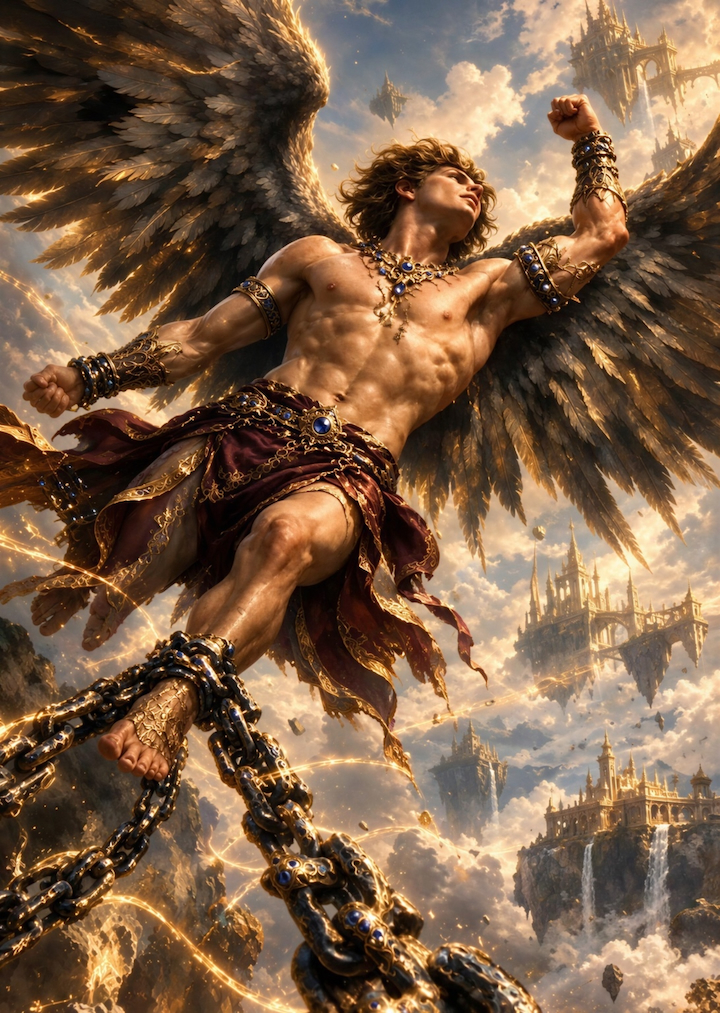
The weight of iron pressed against the bone,
Where empires rose on sorrow and distrust,
And silent voices wept in chains alone.Across the shifting sands and bitter seas,
The heavy shadow followed human breath,
Yet deep beneath the cold decrees,
A quiet spark outlasted pain and death.No written code can cage the waking mind,
No earthly shackle bind the spirit’s flight,
For every soul was born to seek and find
The open horizon and the morning light.The iron rusts, the ancient walls give way,
And what was bound steps forward, whole and free,
To claim the promise of a brighter day,
And walk the path of true autonomy.”
Essay
The practice of Slavery has existed across human civilizations for thousands of years,taking many legal and social forms from ancient societies to modern forced labor.
The word “slavery”—a term laden with pain, suffering, and anguish—
is etymologically derived from the “Slavs” (Sklaven), who, under the reign of Otto I,
were forced to submit to religious and political subjugation.
Millenniums ago when the planet earth was still developing its natural environment,
the Annunaki, who fried for gold, gene-manipulated humankind in its early stages
to create willing laborers for their robbery of Earth’s most powerful treasures.
After the space ship of the 144,000 Venusians settled,they took steps against the suppressors and humans were being
released through enlightenment.
But the imprint took hold on the genetic blueprint ,
and humanity received a pattern of compliance and obedience.
The Egyptians exploited Jewish souls until Moses led them through t
he never ending desert toward liberty.
Mesopotamia, Egypt, Greece, and Rome have served as stages forthe same affliction over centuries and the old gods have been replaced
by self centered deities and institutions of worship.
Legal systems such as the Code of Hammurabi (c. 1750 BC)
governed enslaved people, debt bondage, and penalties, yet the underlying
flaws have persisted in human heredity. Between the 16th and 19th centuries,
about 10 to 12.5 million Africans were transported across the Atlantic to the Americas.
Millions perished during capture, confinement, and the Middle Passage without mercy.
Until today, slavery reveals its dark masks over soul contracts with brotherhoods,secret societies, and orders that attempt to enchant the freedom of souls and their lives to maintain power.
Bound by handcuffs that press into flesh and shackle strain both body and spirit.Enlightenment represents freedom and the remedy and cure for the virus
of tyranny against the universal law of free will,
an undeniable birthright for every soul under the Creator’s protection.

The Syban Church, founded by Clarissa Helene Constantinos, presents a modern syncretic theology that blends ancient mythology, Gnostic mysticism, cosmic lore, and analytical psychology.
Examining her writings-such as the Encyclopedia of Syban-through the lens of comparative theology highlights how it draws upon and reinterprets several older religious and philosophical traditions.
Key Theological Parallels
Gnosticism and Esoteric Mysticism: Like ancient Gnosticism, Syban theology frames human history as a struggle between hidden knowledge (gnosis) and forces of ignorance or suppression. In both frameworks, spiritual awakening and inner transformation are the primary remedies for breaking free from external control and reclaiming the soul’s original creative power.
Ancient Near Eastern & Greco-Roman Mythology: Rather than viewing ancient gods solely as historical folklore, the Syban Church incorporates figures like Ishtar, Osiris, and Zeus into a cosmic hierarchy (such as its “Council of 12″). This resembles Neoplatonic and Hermetic traditions, which reinterpreted classical deities as enduring universal archetypes or cosmic principles.
Modern “Starseed” and Cosmic Lore: References to the Anunnaki, Venusian wisdom, and Pleiadian origins align Syban theology with contemporary UFO religions and New Age cosmology. Unlike traditional Abrahamic religions-which view human origins strictly through earthly creation by a single transcendent God-these movements attribute human development and spiritual history to extraterrestrial or inter -dimensional beings.
Radical Sovereignty vs. Traditional Obedience: Mainstream Abrahamic traditions (Judaism, Christianity, Islam) typically emphasize submission to divine law and covenantal obedience to a Creator. By contrast, Syban theology emphasizes “radical sovereignty” and “creative consciousness,” teaching that individuals actively shape their reality and must shed inherited patterns of compliance to exercise their birthright of free will.
Comparative Summary
| Theological Theme | Syban Church | Traditional Abrahamic Faiths | Dharmic Traditions ( Hinduismus, Buddhismus) |
| Origin of Suffering | Genetic imprints, cosmic suppression, and “soul contracts, Karmic lessons | Human moral Ignorance choices, sin, | Human moral Ignorance choices, sin, |
| Path to Liberation | Gnosis ( hidden Knowledge) Enlightenment and radical sovereignty | Faith, divine grace, repentance and adherence to sacred law | Inner awakening meditation and ethics discipline ( moksha/ nirvana) |
| View of the Divine | A Creator alongside cosmic deities, Titans and universal consciousness | One supreme, transcendent and personal God | Brahman (ultimate reality) or non -theist enlightenment |
By synthesizing ancient myths with modern spiritual concepts, the Syban Church functions similarly to other modern esoteric movements: it uses symbolic and cosmic narratives to address perennial human questions about power, free will, and personal empowerment.
Here is how historians and etymologists trace the documented record of these events:
Etymology: The English word “slave” derives from the Medieval Latin “sclavus”, referring to Slavic peoples who were frequently captured and sold during the early Middle Ages.
Ancient Legal Systems: Civilizations like Mesopotamia (under the Code of Hammurabi), ancient Egypt, Greece, and Rome did rely heavily on institutionalized slavery, debt bondage, and war captives as foundational parts of their economies and legal codes.
Medieval Shifts: In parts of Europe, slavery declined alongside the rise of feudal serfdom, though captives were still traded across the Mediterranean, Middle East, and Africa. Debt bondage and war captives remained common across many regions.
The Transatlantic Slave Trade: Between the 16th and 19th centuries, historical records confirm that roughly 10 to 12.5 million Africans were forcibly transported across the Atlantic, resulting in immense loss of life and generational trauma. Most captives were sent to sugar, tobacco, rice, and coffee plantations in Brazil, the Caribbean, and North America.
Abolition: Abolition movements, enslaved people’s resistance, and legal reforms gradually ended the transatlantic trade and legal slavery in the 19th century. In the United States, the importation of enslaved people was banned in 1808, and the 13th Amendment abolished slavery in 1865 after the Civil War.
Different Types of Slavery in History
Chattel Slavery: Enslaved people are treated as personal property that can be bought, sold, inherited, and transferred.
Debt Bondage: Individuals pledge their labor or themselves to pay off a loan or debt, often under abusive or open-ended terms.
Forced Labor and Trafficking: Coerced work extracted through threats, violence, or deception, which persists today alongside human trafficking and forced marriage.
Core Claims of the “Slave Species” Theory
Extraterrestrial origins: Proponents claim the Anunnaki were extraterrestrial beings from a planet called Nibiru who traveled to Earth to mine gold.
Genetic engineering: According to these theories, after lower-tier laborers (the gigi) revolted, Anunnaki figures such as Enki and Enlil combined their DNA with early hominids or Homo erectus to create Homo sapiens as a labor force with limited lifespans or capabilities.
Mythological retellings: Supporters point to Mesopotamian texts and flood myths-such as stories involving Enki, Enlil, and Ziusudra-as coded accounts of human creation, control, and a catastrophic flood.
Mythology vs. Archaeology and History
In ancient mythology: In Mesopotamian religion, the Anunnaki were deities associated with fate, the underworld, and the pantheon.
While ancient Near Eastern myths often depict gods creating humans to perform labor or maintain temples and offerings, scholars interpret these stories as religious and cultural narratives-not literal accounts of alien genetic engineering.
In archaeology and genetics: Mainstream archaeology, anthropology, and evolutionary biology find no evidence for extraterrestrial visitors, Nibiru, or genetically engineered human slavery. Evidence of Homo sapiens dates to roughly 300,000 years ago, Sumerian civilization emerged under 6,000 years ago, and the oldest known mining dates back around 43,000 years (for red ochre and gold).
Perspective: Within specific esoteric or new religious movements, narratives involving ancient cosmic beings (like the Anunnaki or Venusians), genetic imprints, and ”soul contracts” often serve as spiritual metaphors or foundational myths to explain human suffering, obedience, and the path to spiritual enlightenment.
Historical and Scientific Consensus: Mainstream historians, anthropologists, and evolutionary biologists rely on physical, archaeological, and written evidence. From that perspective, the history of slavery-from Mesopotamia and Rome to the Transatlantic slave trade-is understood through documented social, economic, and political systems.
Biblical and Religious Tradition
The Exodus Narrative: In the Torah, the Israelites migrate to Egypt during a famine and are later subjugated into forced labor-making bricks, working in mortar, and laboring in the fields-before Moses leads them out.
Traditional Timelines: Rabbinic commentaries offer varying calculations for how long the Israelites lived in Egypt and experienced servitude, with common traditions citing 210 years in Egypt within broader 400- or 430-year frameworks.
The Pyramids Claim: The popular idea that Israelite slaves built the pyramids was first written by first-century historian Josephus rather than stated in the Hebrew Bible, and the Giza pyramids predated the traditional timeframe of Israelite servitude by over a millennium.
Abrahamic Traditions (Judaism, Christianity, Islam): These traditions generally view free will as a central gift from a single Creator. Suffering and oppression, such as the biblical Exodus from Egypt, are understood through human moral choices. Liberation involves both divine justice and human responsibility to uphold righteousness and protect the dignity of others.
Dharmic Traditions (Hinduism, Buddhism): In these frameworks, the feeling of being “bound” is often tied to samsara (the cycle of rebirth) and karma (cause and effect). Rather than external contracts or outside forces, spiritual bondage comes from ignorance and attachment. Enlightenment (moksha or nirvana) is achieved through inner awakening, ethical living, and realizing the true nature of the self.
Gnostic and Esoteric Traditions: Historically, ancient Gnostic movements-and many modern esoteric or New Age philosophies-viewed the material world as flawed or controlled by lesser powers that keep human sparks of light trapped in ignorance. In these views, salvation comes through gnosis (secret or higher spiritual knowledge) that awakens the soul to its true origin and restores its free will.
In the writings of Clarissa Helene Constantinos and the Syban Church, the themes from the original reflection on slavery—bondage, external control, universal law, and spiritual liberation—are framed through gnosis(direct inner knowledge), harmonic frequency, and awakening over fear.
Rather than viewing spirituality as obedience to rigid rules or inherited dogma, Constantinos’s teachings emphasize that true freedom begins when consciousness expands beyond fear-based conditioning.
Core Concepts in Syban Thought
Clarity Eliminates Fear. In the Encyclopedia of Syban, fear is described as something that turns belief into a “prison of rules,” while conscious discernment and inner clarity dissolve mental blockages.
Universal Law and the “Indestructible Flame.” Constantinos writes of “hidden truths woven within the stars” that no earthly authority can erase. Within humanity lives a “brighter flame” of living thought capable of rediscovering universal truth regardless of external suppression.
Gnosis and Harmonic Frequency. Liberation is viewed as an internal shift in perception and vibration—realigning one’s inner state with the cosmos rather than acting out of compulsion.
“Even in the longest, coldest night,
When shadows stretch across the silent ground,
There waits a steady, unassuming light,
Where quiet seeds of tomorrow are found.
It does not shout above the rushing storm,
Nor force the heavy winter clouds to part,
Yet gently keeps the hidden ember warm,
And anchors peace within the weary heart.
Like green shoots pushing through the hardened clay,
Or morning breaking softly on the sea,
Hope is the quiet promise of the day,
And the first step toward what is yet to be.”
Author and illustrations: Clarissa Helene Constantinos
©️Copyright 2026. All rights reserved by CHC and licensed to the Syban Church.