
-Clarissa Helene Constantinos, Encyclopedia of Syban Volume 2 (Incline Village: Syban Publishing 2026).
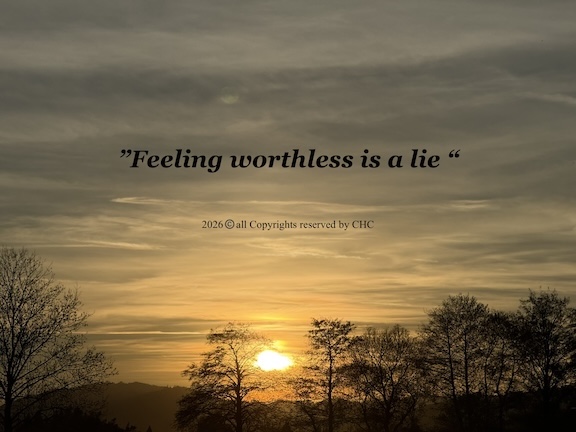
The phrase “Feeling worthless is a lie” aligns with the metaphysical and spiritual teachings of Clarissa Helene Constantinos, shared through her digital platform, the Syban Church.
Her work blends analytical psychology, New Thought principles, and metaphysical writings focused on the intentional evolution of human consciousness.
Core Philosophy: Breaking the Illusion of Scarcity
In the paradigm of Clarissa’s teachings, feeling worthless or diminished is viewed as a false internal state born from learned limitations rather than reality.
Key themes from her work addressing this include:
Inherent Abundance: Her writings emphasize that there is no true scarcity in the universe, only the perception of scarcity. Experiencing feelings of lack or inferiority means your vibrational scale has lowered to a frequency of helplessness.
The Creator of Your Macrocosm: A central axiom of her philosophy states, “You are the creator of your own macrocosm. Under this view, your internal state of mind directly dictates your reality. Feeling worthless is considered an illusion-a “lie”-because your true nature is inherently connected to an infinite, abundant source.
Reclaiming Personal Power: Her essays suggest that people often carry inherited patterns of anxious control or inferiority within their energy centers (such as the Solar Plexus Chakra). Breaking free from these feelings requires the unconditional acceptance of your inner strength and dismantling the false beliefs, your parents and family, your social environment or yourself have imposed upon yourself.
“The Feeling is the Key”
Mirroring classic New Thought concepts, Clarissa’s teaches that somatic and emotional awareness are conduits to understanding consciousness. In this framework, recognizing that a feeling of worthlessness is a lie allows an individual to shift their internal state, thereby rewriting their personal reality.
That statement is a powerful truth: feeling worthless is a lie because feelings are indicators of your current emotional state, not definitions of your actual value.
When you experience a deep sense of worthlessness, it is often the result of cognitive distortions, painful past experiences, or mental health struggles like depression-not an objective fact about who you are.
Your brain can generate intense emotional states based on stress, exhaustion, or old trauma. Just because an emotion feels overwhelming does not mean it reflects reality.
Your feelings create your reality!
The “Filters” of Depression and Anxiety:
Mental health challenges act like warped lenses, filtering out your achievements, strengths, and connections, leaving you with a false sense of being a burden or having no value.
External vs. Internal Value: Worthlessness is often triggered by external factors-like a difficult breakup, job loss, or harsh criticism.
However, your fundamental human worth is innate and unchanging; it cannot be diminished by external circumstances or other people’s opinions.
Shifting the Narrative
Recognizing that the feeling “worthless” is a lie is the first step toward breaking its hold.
Here are a few ways to push back against it:
Acknowledge without agreeing: You can say to yourself, “I am feeling worthless right now, but I know that feeling is not my true self.” Separating your identity from the emotion reduces its power.
Challenge the inner critic: When your mind tells you that you don’t matter, gently demand evidence. Remind yourself of small victories, moments you made someone smile, or things you enjoy. Ask yourself if this “lie” is truly your feeling or was this feeling implanted from someone or something outside of you.
Focus on the somatic shift: Emotional pain often manifests physically (a heavy chest, a sinking stomach). Focus on breathing through the physical sensation rather than spiraling into the negative thoughts attached to it.
The statement “Feeling worthless is a lie” lies at the heart of the spiritual and metaphysical teachings of Clarissa. Through her publications, she conveys a philosophy that integrates depth-psychological approaches (specifically Jungian archetype theory) with concepts from the New Thought movement (“feeling is the key”) and energy healing.
Based on her teachings, the core message behind this principle can be broken down into the following key points:
1. The Illusion of Separateness
Clarissa emphasizes that the feeling of being worthless—or of not mattering to anyone—is an illusion and a lie. According to the philosophy of the Syban Church, every soul is directly connected to the “God Source.” Those who grasp this fundamental connection come to realize that loneliness and worthlessness are merely constructs of the ego or the result of false conditioning.
2. Adopted Voices and Conditioning
In her content, she explains that the inner voice urging us to “make ourselves smaller,” to harbor self-doubt, or to feel worthless is often not our own. Rather, these are inherited patterns, societal systems, and old forms of programming that obscure one’s own intuition and true self. Recognizing this lie is the first step toward liberation (“Actually Possible Freedom”).
3. Feeling as a Conduit
Drawing on metaphysical classics (such as Neville Goddard’s *Feeling is the Secret*), the Syban Church teaches that emotions and somatic awareness are the keys to transformation. Instead of suppressing negative feelings such as worthlessness, the goal is to regulate the nervous system, expose underlying limiting beliefs as untrue, and replace them with the universal truth of one’s own inherent value.
In summary, Clarissa Constantinos’s philosophy views the feeling of worthlessness as a spiritual blockage that must be dissolved through radical honesty, energetic alignment, and trust in one’s own divine connection.
The feeling of worthlessness is a heavy burden, but it does not reflect your true value.
Where this feeling comes from
• Negative thought patterns: Self-doubt, past setbacks, or criticism can lead you to devalue yourself.
• Psychological strain: Conditions such as exhaustion, anxiety, or a depressive state often cloud your ability to see your own strengths.
- External influences: Pressure to perform or major life crises can often create the false impression that you are “not enough.”
The Psychological Perspective
In psychology—particularly in cognitive behavioral therapy—the feeling of worthlessness is often classified as a cognitive distortion. Our brain filters information in such a way that it perceives only the negative, while screening out positive experiences.
• Breaking the cycle of negative thoughts: Recognizing that a thought like “I am worthless” is a flawed assessment rather than reality helps to halt an emotional downward spiral.
• Personal growth: Many people find that letting go of this belief is the key to overcoming a fear of rejection and pursuing personal goals with courage.
The Spiritual and Christian Perspective
In many spiritual and Christian contexts, it is a firmly held belief that every human being possesses an inherent, unchanging value.
- God’s masterpiece: From a biblical perspective, it is emphasized that human beings are intentionally created and unconditionally loved. Here, the feeling of worthlessness is often understood as a deception—a “lie from the enemy”—that stands in direct contradiction to God’s promise.
- Comfort during crises: Passages—such as those found in articles on self-worth or words of encouragement shared within faith communities—often use this sentiment to help restore hope and a sense of dignity to individuals experiencing periods of deep discouragement or struggling with addiction.
Signs of persistent feelings of worthlessness
When this feeling becomes highly dominant, it may be a symptom of a more profound mental health struggle or depression, typical accompanying signs include:
• Persistent hopelessness
• Intense, unfounded feelings of guilt
• A sense of being isolated or “beyond help” (i.e., beyond the reach of treatment)
If these feelings are persistent, heavy, or making it difficult to function, they are a strong sign that you deserve support. Reaching out to a trusted friend, family member, or a mental health professional can help you navigate through the distortion and reconnect with your true value.