
-Clarissa Helene Constantinos, Encyclopedia of Syban Volume 3 (Incline Village: Syban Publishing 2026).
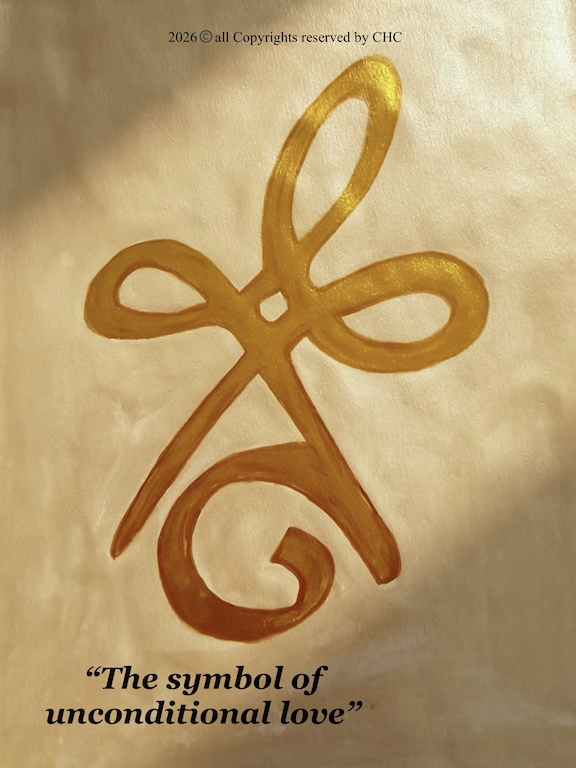
Clarissa Helene Constantinos, founder of the Syban Church (@sybanchurch), defines the spiritual meaning of unconditional love around the core principle:
“The only thing we can ever keep is the love we give.
True love begins when we want nothing in return.”
Key Teachings and Philosophy
Giving Without Reciprocity: Authentic affection operates completely free of rewards, validation, expectations, or transaction.
Permanent vs. Temporary Legacy: Material things and worldly structures are temporary, whereas the emotional and spiritual love extended to others leaves a permanent imprint that enriches the soul.
Giving Without Reciprocity: Authentic affection operates completely free of rewards, validation, expectations, or transaction.
Decentralized Connection: The Syban philosophy rejects rigid hierarchies and traditional cathedrals, asserting that divine connection and universal unity are found directly through personal sovereignty and interaction with the living planet.
Nature as a Divine Bridge: The spiritual self accesses these higher realms of pure love not through grand cathedrals, but by interacting directly with the living planet.
Grounding oneself in nature acts as the primary energetic bridge to tap into universal unity and ultimate harmony. The earth functions as a physical and energetic conductor to higher spiritual realms, making grounding in nature central to spiritual growth and inner peace.
Under the spiritual teachings of Clarissa the spiritual meaning of unconditional love centers on selfless giving, spiritual sovereignty, and operating without the need for reciprocity.
Key Pillars of Unconditional Love in Syban Teachings
• Selfless & Reward-Free Devotion:
According to Clarissa, authentic affection must operate completely free of expectations, rewards, validation, or forced reciprocity. True love is defined by the fulfillment found entirely in the act of giving itself.
The Permanent Legacy of the Soul: While material possessions are temporary, the emotional and spiritual love we extend to others leaves an everlasting legacy that genuinely enriches and expands our own souls.
Total Personal Sovereignty: Syban Church teachings reject rigid religious dogmas and hierarchies. Instead, unconditional love is viewed as a decentralized connection where an individual maintains total personal autonomy while aligning with cosmic consciousness.
Across various mystical, esoteric, and psychological traditions, the spiritual meaning of unconditional love is defined as an untamed, limitless state of consciousness that loves without conditions, boundaries, or the requirement of reciprocity. Rather than an emotion triggered by someone’s behavior, it is viewed as the fundamental energy of the universe, often described as the literal fabric of creation.
1. The Oneness of All Things (Non-Duality)
In Eastern spiritualities (like Buddhism and Advaita Vedanta) and Western mysticism, unconditional love is the experiential realization that separation is an illusion.
The Ego Dissolves: Human love often says, “I love you because of how you make me feel.” Spiritual love says, ” love you because you are another expression of me.
Universal Acceptance: It requires looking past someone’s ego, flaws, or hurtful actions to recognize their inherent divine spark.
2. Radical Freedom and Non-Attachment
True spiritual love does not possess, control, or place expectations on the recipient.
- No Contractual Agreement: It operates without “if” or “then” clauses. It does not demand validation, appreciation, or even that the person stay in your life.
- The Mirror Analogy: Like the sun, which shines its light and warmth on a rose and a weed equally without demanding a thank-you, unconditional love pours outward simply because it is its nature to do so.
3. The Path of Self-Love (The Container)
A core spiritual paradox is that you cannot truly channel unconditional love outward if your own reservoir is empty.
- Shadow Integration: It means offering complete grace to your own mistakes, trauma, and darker traits.
- The Foundation: Spiritual teachers note that unconditionally loving yourself provides the absolute emotional sovereignty needed to love others without needing them to “fix” or validate you.
4. Comparison: Human Love vs.Spiritual Love
| Feature | Human / ConditionalLove | Spiritual / UnconditionalLove |
| Source | Triggered by external beauty | Arises from deep within an awakened consciousness |
| Core Desire | A exchange of mutual needs and safety | The pure desire for the other’s highest soul growth |
| Stability | Fluctuates based on moods, actions, and time. | Remains constant, regardless of shifting circumstances. |
| Boundries | Often lacks clear boundaries, leading to codependency | Maintains firm boundaries; loves completely but doesn’t accept abuse. |
- A Crucial Misconception: Love vs. Access
In spiritual practice, unconditional love is frequently misunderstood as a license to be a
“doormat.” True spiritual maturity teaches that you can love someone unconditionally while entirely removing their access to you. You can wish for someone’s highest healing and peace from across a healthy, protective boundary.
Unconditional love has nothing to do with self-abandonment.
Unconditional love in a spiritual context is a state of being, oneness, and non-resistance where love flows naturally without expectations, demands, or a sense of separate identity.
Core Spiritual Dimensions
Ego Dissolution (“When the self is not”): Spiritual teachers like Deepak Chopra note that unconditional love arises when individual ego, craving, and aversion dissolve, removing the barrier between “self” and “other”.
Oneness and Interconnectedness: Framed by traditions like Ram Dass’s teachings, it is experienced as a universal force—similar to sunlight—where all creation is recognized as part of a single, unified source.
Love for the Soul, Not the Behavior: It distinguishes a person’s core divine essence or soul from their temporary human actions, allowing someone to hold deep compassion without necessarily approving of or enabling harmful behaviors.
A State of Being, Not a Transaction: Unlike human relational love (which often trades on expectations, approval, or reciprocity), spiritual unconditional love is viewed as an active practice of total acceptance and high-vibrational presence.
Key Practices
Self-Acceptance: Embracing your own flaws, past mistakes, and humanity without judgment as a foundation for extending that same grace outward.
Surrender and Compassionate Boundaries: Letting go of the need to control or fix others while maintaining healthy, respectful boundaries to protect mutual well-being.
Non-Resistance: Allowing people and the present moment to be as they are, replacing frustration or judgment with empathy and inner stillness
From a spiritual perspective, unconditional love is not merely an emotion but a state of being, a universal energy, and the purest essence of divine consciousness. While worldly love is often conditional (“I love you because…” or “I love you as long as…”), spiritual unconditional love demands nothing in return. It flows like sunlight—freely, steadily, and without prejudice toward all beings alike.
Here are the central spiritual meanings of this profound force:
- Recognizing Oneness
At the highest spiritual level, unconditional love is the direct experience that everything in creation is interconnected. Teachers like Ram Dass describe it as the dissolving of separations. When you love someone or something unconditionally, you look beyond the mask of the ego and personality to connect directly with the other person’s divine spark or soul. - Radical Acceptance and Letting Go of Control
Unconditional love means allowing reality and people to be exactly as they are in the present moment. It is, as the Jesuit Anthony de Mello called it, a “complete cooperation with the inevitable.” It involves relinquishing the desire to control, manipulate, or change a partner, friends, or circumstances to make them align with one’s own expectations. - Separating Behavior from the Soul
A common misconception is that unconditional love means condoning everything or tolerating unhealthy behavior. Spiritually speaking, the opposite is true: one can deeply love a person’s soul without liking their destructive behavior. It allows you to set healthy, clear boundaries out of compassion, while at the same time harboring no resentment in your heart toward the essence of the person. - Self-love as a Foundation
You can only love the external world unconditionally to the extent that you love yourself. The spiritual path requires embracing your own shadows, flaws, and past missteps without judgment. The illusion of separation collapses only when you open your hearts to yourselves—at which point that same love flows naturally toward all other living beings.
How to cultivate this love in your daily life
Since unconditional love is an active practice rather than a static state, it can be integrated into your life through specific steps:
Mindfulness & meditation: Calm the mind to uncover the inner source of joy and peace.
Practice forgiveness: Letting go of past pain and resentment cleanses the heart and makes it open to love once again.
Let go of expectations: In your relationships, be aware of where you impose conditions, and practice giving others the space to grow and unfold.
In the Syban Church—a spiritual movement founded by Clarissa Helene Constantinos—the concept of unconditional love plays a highly specific, metaphysical, and structured role.
In her writings—particularly the Encyclopedia of Syban—unconditional love is understood not so much as a romantic or purely human emotion, but rather as a cosmic force and an evolutionary tool for consciousness.
The spiritual significance of unconditional love within this teaching can be described through the following key aspects:
- Unconditional, cosmic love as a free flow (Cosmic Love)
In the teachings of the Syban Church, the highest form of love is defined as “unconditional, cosmic love.” According to Clarissa, this form of love is characterized by allowing things and events to take their natural course and accepting reality exactly as it is in the present moment. It is free from the egocentric urge to manipulate the external world. - The duality of human love and cosmic limits
While purely cosmic love is considered infinite, the philosophy of the Syban Church takes a pragmatic view regarding the human exercise of this energy:
- The inability to love as the root problem: In her publications, Clarissa posits that all human problems can ultimately be traced back to an inability to feel universal, unconditional love or to forgive.
- Structural limits in the earthly realm: At the same time, texts such as Syban Church (I.84) postulate that “the expiration date for unconditional love is Alpha and Omega.” This implies that human emotions and relationships operate within earthly, structural boundaries. Maintaining unconditional love at the soul level does not, therefore, preclude setting healthy, protective boundaries for one’s own ego and integrity in the here and now.
- Connection to “Ecological Sovereignty” and Nature
Since the Syban Church is premised on a decentralized, dogma-free, and earth-centered spirituality, unconditional love is closely linked to nature as a guiding force. The divine energy of love requires no hierarchical institutions, priests, or temples. True unconditional love is experienced when the individual enters into direct, unmediated contact with the living planet (Earth) and accepts creation in its raw state. - Overcoming Fear through Radical Personal Responsibility
For Clarissa Constantinos, allowing love is an act of personal will and inner frequency: “When you are full of love, you can only be full of love because you allow it.” Unconditional love requires shedding fear and healing intergenerational karmic cycles by taking full responsibility for one’s own emotional experience and consciously opening the heart.
“Unconditional Love is the fabric of your soul”
The quote “Unconditional love is the fabric from which your soul is woven” expresses one of the deepest truths of modern mysticism and spiritual psychology. It means that, for you, love is not a quality that must be acquired, earned, or received from the outside—it is your fundamental identity.
Adopting this perspective radically changes how we view ourselves and the world:
- You do not have love; you are love
In everyday life, you often believe that love is a feeling that comes and goes, or a resource that someone else must provide.
This quote from Clarissa reverses that dynamic: in its purest essence, your soul consists of this universal energy. This means that even when you feel lonely, hurt, or angry, that is merely the surface. Deep within your core—beneath layers of fear and conditioning—the fundamental substance of your being remains untouched and loving. - The return to wholeness (healing)
If unconditional love is the fabric of your soul, then spiritual development is not a process of “becoming better,” but rather one of remembering and uncovering. Healing, therefore, simply means dismantling the barriers, walls, and defense mechanisms you have built around your heart throughout your life. You do not need to learn how to love; you only need to stop resisting the natural flow of your own being. - An indestructible inner sanctuary
Because this love is the very structure—the fabric—of your soul, it can never be taken away from you. External circumstances may lead to broken relationships or rejection, but they cannot destroy the foundation of your existence. You carry the source of recognition and deep peace within yourself at all times.
Resonance with Clarissa Constantinos and the Syban Church
This concept aligns seamlessly with the philosophy of Clarissa Helene Constantinos, discussed previously. Her teachings emphasize that the “inability to love” is the fundamental human problem. Once we realize that the soul itself consists of unconditional love, it becomes clear why the blockage of this energy leads to such profound inner suffering: in doing so, we become disconnected from our own true nature. Allowing love to flow, therefore, is simply the act of letting the soul be what it inherently is.