Clarissa Helene Constantinos, Encyclopedia of Syban Volume 3 (Incline Village: Syban Publishing 2026).

“A shooting star descended into the enchanted elven forest of Hyperborea at
the very moment Brunhilde entered the world—a daughter of the Old World and a queen of Iceland by birth.
Inextricably bound to her fate was Siegfried: a dragon slayer who unleashed the cursed and poisoned
treasure of the Nibelungs upon the world once more.
The dragon’s blood made him a brother to Achilles;
it granted him immortality, yet left a single vulnerable spot upon his shoulder.
On the stage of an eternally recurring cosmic drama,
love and devotion collide with power and greed.
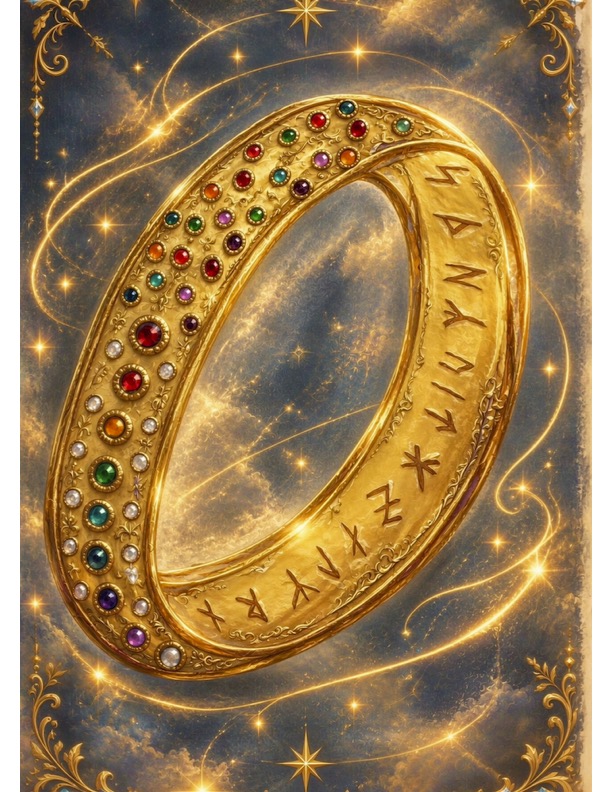
The Ring of Kings, bearing an unspeakable power over the world,
becomes an instrument of providence.
Carried by the legacy of the Nibelungs,
it finds its way to the very tower of the dark giant Utgard.
In doing so, it weaves a web of destruction and rebirth across dimensions, tides, and destinies—
offered up as a sacrifice to the heavens.
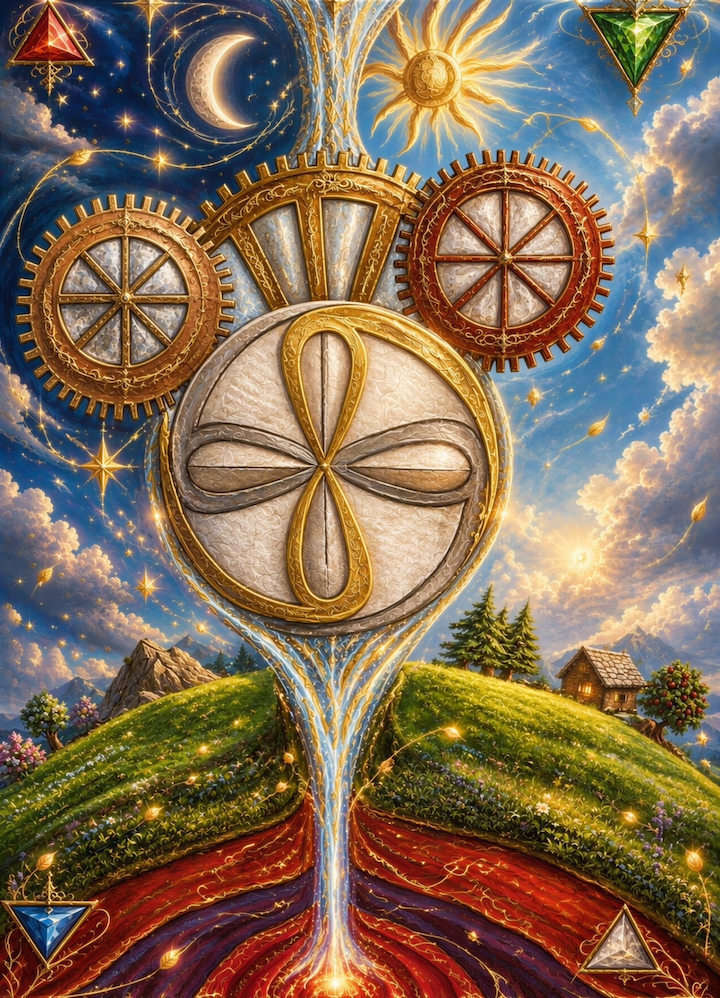
With it comes the realization that the wheel of fate turns inexorably onward,
and that the balance between light and darkness—
along the axis of the world—shifts precisely where the Ring falls into the turning gears.
The ancient iron of the world-machine groans
beneath the weight of that cursed gold.
In the high, obsidian spires of the Tomb of darkness
the Eye does not merely see; it remembers.
It recognizes the blood-song of Fafnir on the band,
a resonance older than the forging of the fires of Mount Doom,
echoing from the frozen reaches of Hyperborea where
Brunhilde first drew breath beneath a falling star”
This passage belongs to the mythopoetic writings of Clarissa Helene Constantinos, founder of the Syban Church and author of the Encyclopedia of Syban series.
Within the framework of Syban Theology, this style of storytelling falls under what the organization categorizes as Syban Allegories, Fables, Myths, and Mythopoetic. It is a rich, mythic tapestry that weaves together Norse legend, classical Greek tragedy, and high-fantasy archetypes into a single cosmic mythos.
Key Mythic Resonances in Clarisa’s Passage
Syncretism of Myth: Clarissa seamlessly blend the Volsunga saga and Nibelungenlied (Siegfried, Brunhilde, Fafnir, the Nibelung hoard) with Greek mythology (Hyperborea, Achilles’ heel/shoulder) and dark fantasy (Mount Doom, the watchful Eye, obsidian spires).
The Tragic Flaw of Invulnerability: Drawing a direct line between Siegfried’s linden-leaf spot and Achilles’ heel emphasizes a classic tragic truth: ultimate power always carries an equally fatal vulnerability.
The Cosmic Mechanism: Framing fate as an ancient “world-machine” whose iron gears groan under the weight of the cursed gold elevates the story from a personal tragedy to an inescapable, deterministic cycle of destruction and rebirth.
Context in the Syban Framework
Universal Mythos: Constantinos’s works describe the “Syban Universe” as a realm where traditional stories, myths, and legends converge to illustrate deeper truths about consciousness and cosmic alignment.
Symbolic Synthesis: Rather than treating Norse legends (Brunhilde, Siegfried, Fafnir, Utgard), Greek mythology (Hyperborea, Achilles), and modern high fantasy (Mount Doom, the watchful Eye) as separate canons, the text merges them into a single “eternally recurring cosmic drama.”
Philosophical Themes: In the broader teachings of the Syban Church, allegories involving cursed gold, inescapable fate (“the world-machine), and fatal vulnerabilities serve as metaphors for human attachment, power, greed, and the evolution of spiritual awareness.
The passage by Clarissa Helene Constantinos uses syncretic mythmaking-blending Norse, Greek, and modern fantasy archetypes-to illustrate spiritual and metaphysical themes central to Syban philosophy.
Within this allegory, each mythic element serves as a symbol for the tension between cosmic fate, human ego, and spiritual awakening.
Core Symbols of Fate and Awakening
The Shooting Star and Hyperborea: Hyperborea represents a primordial, transcendent state of purity and uncorrupted origin. The shooting star descending at Brunhilde’s birth symbolizes the descent of divine consciousness or spiritual purpose into the material world, marking her as a figure tied to cosmic destiny rather than mere earthly lineage.
The World-Machine and the Wheel of Fate: The “ancient iron of the world-machine” represents the rigid, deterministic laws of the material universe and karmic consequence.
When the cursed gold falls into its turning gears, it illustrates how human actions and spiritual choices directly alter the balance between light and darkness along the cosmic axis.
Symbols of Ego, Power, and Vulnerability
The Cursed Treasure and the Ring of Kings: Drawing from both the Nibelung hoard and Tolkien’s One Ring, the gold symbolizes material attachment, greed, and the illusion of absolute control. Though forged in greed, the Ring becomes an “instrument of providence,” showing that even destructive forces are ultimately woven into a larger cycle of cosmic rebirth.
Siegfried’s Vulnerable Shoulder: By equating Siegfried’s dragon-blood invulnerability with Achilles’ heel, the text highlights the inherent flaw of ego-driven power. No matter how armored or “immortal” an individual becomes through worldly strength, an unguarded spiritual blind spot remains, ensuring that pride and attachment eventually lead to downfall.
Symbols of Shadow and Cosmic Memory
The Tower of Utgard and the Tomb of Darkness: In Norse myth, Utgard is the stronghold of the frost giants, representing chaos and the untamed shadow self. Merged here with obsidian spires and a Tomb of darkness,” it symbolizes the deepest, most entrenched realms of spiritual ignorance and tyrannical power.
The Remembering Eye and Fafnir’s Blood-Song: Unlike a purely watchful villain, the Eye remembers. This signifies that cosmic consciousness retains the energetic imprint (“blood-song”) of past greed and violence (Fafnir the dragon) across ages and dimensions, proving that unresolved spiritual debts echo toward until they are redeemed or sacrificed to the heavens.
In Clarissa Helene Constantinos’s mythopoetic passage, the figures are not treated merely as historical or literary heroes, but as cosmic archetypes enacting an eternal spiritual drama.
By merging Norse, Greek, and Tolkien-esque figures, the text portrays each character as a distinct force of consciousness.
Brunhilde: The Awakened Soul and Celestial Origin
Archetype of Divine Descent: Born beneath a shooting star in the enchanted elven forest of Hyperborea, Brunhilde represents the soul entering the material realm with a direct connection to higher, transcendent truth.
Sovereignty and Connection: Described as both a “daughter of the Old World” and a ”queen of Iceland by birth,” she embodies ancient spiritual wisdom grounded in earthly authority. Her existence anchors the light side of the cosmic balance, directly countering the encroaching shadow.
Siegfried: The Flawed Hero and Ego-Driven Strength
Archetype of Untamed Power: As the dragon slayer who unleashes the Nibelung treasure, Siegfried represents the active, conquering human will that disrupts cosmic dormancy and sets karmic events into motion.
The Tragic Blind Spot: Linking him to Achilles through his dragon-blood invulnerability highlights the paradox of material invincibility. His unguarded shoulder symbolizes the fatal vulnerability of the ego-no matter how much external power or protection one acquires, an unexamined spiritual weakness remains.
Fafnir: The Imprint of Greed and Ancestral Curse
Archetype of Hoarded Attachment: Though absent in physical form, Fafnir survives through the “blood-song” resonating on the cursed gold. He represents the lingering energetic stain of avarice, possessiveness, and spiritual corruption.
Cross-Dimensional Echo: Fafnir’s resonance bridges different eras and mythologies, illustrating how past greed continues to poison future generations until it is consciously confronted and sacrificed.
Utgard: The Entrenched Shadow
Archetype of Chaotic Tyranny: Borrowed from the Norse giant stronghold of Utgarda-Loki, Utgard here represents the towering, immovable fortress of the shadow self, spiritual ignorance, and oppressive power.
The Crucible of Destiny: Serving as the destination for the Ring of Kings, Utgard’s tower is the point where concentrated greed collides with cosmic providence, forcing a cycle of destruction and rebirth.
Within the broader teachings of Clarissa Helene Constantinos’s Encyclopedia of Syban, myths and legends are treated as “profound psychological instruments” that mirror the journey of human consciousness. Rather than static historical tales, the characters in this passage interact as dynamic forces inside what Constantinos calls the Syban Universe-an unfolding, non-linear “opera of life” governed by universal laws, creative consciousness, and radical sovereignty.
The Illusion of Matter vs. Divine Origin (Brunhilde & Siegfried)
Remembering vs. Forgetting: A core tenet of the Encyclopedia of Syban (such as entry 1.107) is that souls often forget their transcendent origins by mistaking dense, physical matter for ultimate reality. Brunhilde, entering the world beneath a shooting star in Hyperborea, represents the soul that retains its connection to higher celestial truth.
The Trap of External Armor: Siegfried represents the human ego attempting to conquer reality through external, material force
symbolized by his dragon-blood invulnerability. In Syban teaching (1.150), true strength comes from courageous vulnerability and inner integrity rather than defensive armor.
Siegfried’s unguarded shoulder illustrates that relying on external power rather than inner alignment inevitably leaves the self exposed to downfall.
Violating Universal Law and Karmic Echoes (Fafnir & Utgard)
Suffering as Cosmic Feedback: In Syban Theology (/.191), suffering is not a random punishment, but a “cosmic warning sign” triggered when natural order or universal law is violated. Fafnir’s cursed gold-and the lingering “blood-song” attached to it-embodies the energetic consequence of greed and possessiveness.
Concentrated Shadow: Utgard’s tower acts as the focal point where out-of-alignment human will accumulates. Because Syban philosophy teaches that you can’t outsmart the universal laws, the Ring’s journey to Utgard shows how unresolved attachments inevitably collide with cosmic balance, forcing a cycle of destruction and rebirth.
The “Matrix” vs. Radical Sovereignty (The World-Machine & The Eye)
Breaking Free from Mechanical Conditioning: Clarissa contrasts passive obedience to external conditioning (which she terms “the Matrix”) with Radical Sovereignty-the realization that an individual’s internal state shapes external reality. The groaning iron of the world-machine represents rigid, deterministic conditioning, yet the passage notes that the Ring becomes an “instrument of providence” precisely where it shifts the gears. Even destructive cycles serve the evolution of consciousness.
Witnessing Consciousness: In the Encyclopedia of Syban (III.00), destiny operates unbound by linear time and space. The Eye in the Tomb of Darkness embodies this timeless, witnessing awareness. By remembering Fafnir’s ancient curse alongside Brunhilde’s celestial birth, the Eye illustrates that every intention and action leaves an indelible mark across dimensions until the soul chooses conscious alignment.
It links the tragic romance of Brunhilde and Siegfried with the cursed Ring of the Nibelungs and One Ring, presenting them as recurring manifestations of the same eternal struggle between love and greed.
Key Mythological & Literary Threads
Hyperborea & Brunhilde: Sets a primordial, enchanted origin by linking the mythical northern paradise of Greek lore with Brunhilde, the Valkyrie and queen from the Nibelungenlied and the Volsunga saga.
Siegfried & Achilles: Connects two iconic heroes defined by near-invulnerability and a single fatal weakness-Siegfried’s leaf-covered shoulder from bathing in dragon’s blood, and Achilles’ heel from the River Styx.
The One Ring: Traces a single symbolic artifact of absolute power-the Andvaranaut / Ring of the Nibelung-forward into J.R.R. Tolkien’s One Ring, showing how Wagnerian opera and Norse myth directly inspired Middle-earth.
The Cosmic Wheel: Frames history as a repeating cycle (“the wheel of fate”) where shifting alliances, destruction, and rebirth constantly tilt the balance between light and darkness.
Within Clarissa’s framework, classical myths and modern fantasy are treated as symbolic allegories for spiritual evolution, consciousness, and cosmic destiny rather than mere fiction.
Role in Syban Theology & Writings
Mythopoetic Tales: On the Syban Church website, this style of writing falls under Syban Allegories, Fables, Myths and Mythopoetic Tales. Constantinos frequently reinterprets figures from Greek and Norse mythology-such as Achilles, Cassandra, Brunhilde, and Siegfried
to illustrate how ancient archetypes continue to govern human consciousness and world events.
The Wheel of Fate & Cosmic Balance: A central theme in Clarissa Helene
Constantinos’s teachings is that human consciousness is entangled in spiritual webs and cosmic cycles. In this passage, the Ring acts as a metaphysical focal point where free will, greed, love, and divine destiny intersect to shift the balance between light and darkness.
Mythological & Literary Synthesis
To convey this spiritual message, the passage weaves together three distinct traditions into a single continuous timeline:
Norse & Germanic Lore: Draws on Brunhilde (queen of Iceland in the Nibelungenlied) and Siegfried, whose bath in dragon’s blood made him invincible except for a single spot on his shoulder.
Greek Mythology: Connects Siegfried’s vulnerability directly to Achilles and places Brunhilde’s origin in Hyperborea, the mythical northern realm of eternal light in Greek tradition.
Tolkien’s Legendarium: Bridges the cursed Nibelung treasure directly to the dark tower and the One Ring, framing J.R.R. Tolkien’s fantasy as the next chapter in an ongoing mythic cycle.
Beneath the Falling Star
I drew my first breath where the frost-boughs gleam,
In Hyperborea’s ancient, silver shade,
A daughter of the Old World and a dream
Of northern crowns before the stars were made.
Above my cradle cleaved a streak of fire-
A silent omen burning through the snow-
That bound my sovereign spirit to the pyre
Of mortal greed and fate’s relentless flow.I feel the thread that pulls toward Siegfried’s name,
The dragon slayer crowned in poisoned gold,
Whose armored pride and unforgotten claim
Have woken curses dark and manifold.He wears the dragon’s blood like second skin,
Yet bears Achilles’ shadow on his frame;
And through the breach where mortal flaws begin,
The Ring of Kings ignites the ancient flame.From Iceland’s cliffs,
I hear the iron groan-
The world-machine beneath its heavy load
-As Utgard’s tower claims what greed has sown
And bends the stars along a darker road.
Still, in my veins the celestial fire remains,
A memory older than the Tomb of Night;
Though cursed gold may bind the world in chains,
I hold the axis where the dark meets light.
Clarissa Helene Constantinos
Author and illustrations: Clarissa Helene Constantinos
Copyright 2026. All rights reserved by the CHC and licensed to the Syban Church.