
-Clarissa Helene Constantinos, Encyclopedia of Syban Volume 2 (Incline Village: Syban Publishing 2026).
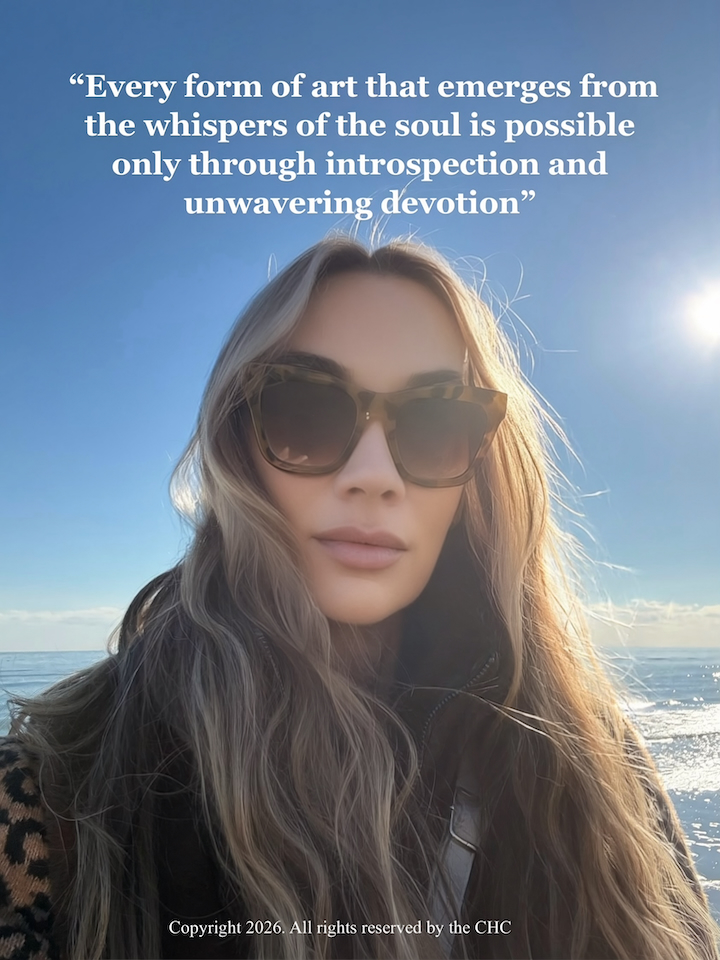
This quote captures a timeless philosophy about the creative process, framing true art not merely as technical skill, but as a spiritual and deeply personal discipline.
Its core ideas align closely with classical aesthetics, Romanticism, and the philosophies of artists who viewed creation as a sacred calling.
Key Themes in the Quote
The “Whispers of the Soul” (Authenticity over Imitation). Rather than chasing external trends or commercial validation, meaningful art begins internally. It requires listening to subtle, personal truths, emotions, and intuitions that are easily drowned out by daily noise.
Introspection (Self-Knowledge as Material). To translate inner whispers into a tangible medium—whether painting, music, writing, or film—an artist must look inward. Introspection provides the clarity and emotional honesty needed to give shape to abstract feelings.
Unwavering Devotion (Discipline and Sacrifice). Inspiration alone is fleeting. Turning a quiet inner impulse into a finished work demands relentless practice, patience, and fidelity to one’s vision, even in isolation or obscurity.
This quote captures the essence of true artistic creation as an interplay between inward reflection and unconditional devotion. It defines art not merely as a craft, but as the result of a profound, spiritual engagement with one’s own self.
The three pillars of this perspective:
The whisper of the soul (authenticity). True art does not arise from external trends or a desire for recognition. It begins as a quiet, personal impulse from within—one that is often drowned out by the hectic pace of daily life.
Introspection (looking inward). To make these subtle inner truths tangible, the artist must explore their own being. Only through honest self-reflection can abstract feelings be translated into music, words, or images.
Unwavering devotion (discipline). Inspiration alone is not enough to complete a work. It requires perseverance, patience, and the willingness to remain faithful to one’s vision, even during moments of solitude or doubt.
Related philosophical concepts:
Rainer Maria Rilke (*Letters to a Young Poet*). Rilke advises descending deep into oneself and writing only when compelled by an inner necessity.
Wassily Kandinsky (*Concerning the Spiritual in Art*). Kandinsky coined the term “inner necessity” as the only true source for any artistic form or color.
Romanticism. Artists and thinkers of this era viewed art as a direct expression of the human soul, and the act of creation as a quasi-religious duty.
Within the context of Clarissa’s writings, this statement fits seamlessly into the broader framework of her philosophy:
Integration into the teachings of Clarissa Helene Constantinos
Consciousness as a creative force. In the texts of the Syban Church, human consciousness is understood as an instrument that actively and intentionally creates reality. In this sense, art is not merely an aesthetic product, but a conscious act of creation that brings inner clarity into the external world.
Introspection over external stimuli. In her contributions, Clarissa emphasizes that true insight and fearlessness arise from inner clarity and self-reflection—rather than from absorbing external turmoil. The “introspection” mentioned in the quote serves precisely as a bridge between the inner soul and the visible work.
Devotion to the higher. Her philosophy bridges modern cosmology with classical mystical and Gnostic traditions. “Unwavering devotion” describes the spiritual discipline required to align one’s creative output with higher principles, rather than simply following worldly expectations.

Author and illustrations: Clarissa Helene Constantinos
©️Copyright 2026. All rights reserved by the CHC and licensed to the Syban Church.