
-Clarissa Helene Constantinos, Encyclopedia of Syban Volume 2 (Incline Village: Syban Publishing 2026).
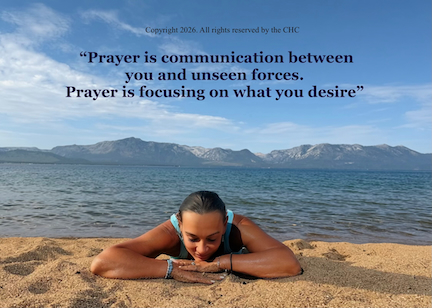
Prayer, in a broad spiritual and philosophical context, is often described as a form of communication or focused intention. Across various beliefs and practices, people view prayer not just as a religious ritual, but as a deep psychological or spiritual focusing mechanism.
The description of prayer as communication with unseen forces and a focus on desire aligns with several perspectives:
Spiritual and Metaphysical Views: Many modern spiritual frameworks define prayer as an alignment of personal energy or consciousness with universal forces, god, or the divine. In these traditions, focusing intently on a desired outcome is believed to manifest or invite that reality into existence.
Psychological Perspectives: From a secular or psychological standpoint, prayer can act as a form of mindfulness, meditation, or autosuggestion. By focusing deeply on what you desire or value, you clarify your intentions, reduce anxiety, and subconsciously prime yourself to recognize opportunities that align with your goals.
Traditional Religious Frameworks: While many traditional religions emphasize worship, gratitude, and submission to a divine will rather than just focusing on personal desires, they still fundamentally view prayer as an active, personal communication link between the individual and the unseen spiritual realm.
That specific quote outlines a distinct philosophical framework shared by Clarissa Helene Constantinos and the Syban Church.
In this specific esoteric teaching, prayer is stripped of traditional religious constraints (such as bowing to an external deity or pleading for mercy) and is instead redefined as a mechanical tool for reality creation.
The two sentences break down into specific principles within that philosophy:
”Prayer is communication between you and unseen forces.” This views the universe not as an empty physical space, but as an invisible ecosystem of energy, consciousness, or metaphysical laws. Prayer is the active bridge or dialect used to interface directly with that hidden realm.
”Prayer is focusing on what you desire.” This definition moves away from traditional supplication and aligns closely with the principles of manifestation or active creation. It states that the mechanism of prayer is simply hyper-focused attention. By locking your mind onto your ultimate desires, you transmit a clear signal to those “unseen forces” to reshape your reality.
Essentially, this perspective reframes prayer from a passive religious duty into an active, deliberate act of creation.
Prayer is an intentional connection between a person and the sacred, a higher power, or an inner spiritual presence.
Core Views on Prayer
Communication and Dialogue: Many traditions view prayer as a two-way conversation involving speaking, sharing your heart, and listening for guidance.
Alignment of Will: Traditional religious views emphasize aligning personal desires with a divine or higher purpose rather than treating prayer like a wish list.
Focus and Manifestation: Other perspectives treat focused prayer or intentional states as a way to embody gratitude, shift energy, and align with what you wish to create.
That quote from Clarissa beautifully captures the intersection of spiritual practice, psychology, and manifestation. When you view prayer through this lens, it transcends strict religious boundaries and becomes a universal tool for directing human consciousness.
Here is a look at how Clarissa’s perspective aligns across different philosophies:
Communication with Unseen Forces
The Spiritual View: Across world traditions, prayer is seen as a sacred act of communication between humans and the divine. Whether you call it God, the Universe, the Holy Spirit, or Source Energy, it is an acknowledgment of an intelligent, invisible reality that reacts to human intent.
The Psychological View: The “unseen forces” can also represent your subconscious mind. Your subconscious processes millions of pieces of data outside your conscious awareness. When you pray, you are speaking directly to this deep layer of your mind, instructing it on what to prioritize
Focusing on What You Desire
Shifting from Lack to Abundance: Traditional prayer can sometimes turn into “begging” for what is missing. However, many mystics and spiritual teachers suggest like Clarissa, that the most powerful prayers focus entirely on the feeling of the desire already being fulfilled. As the scripture states: “What things soever ye desire, when ye pray, believe that ye receive them, and ye shall have them”
The Law of Attention: What you focus on expands. By channeling your energy into a specific desire rather than worrying about the problem, you alter your mental frequency. This sharpens your awareness, helping you notice opportunities, resources, and paths that align with your goals—effectively bridging the invisible desire into physical reality.
In short, whether viewed as an outreach to the divine or a deep alignment of your inner consciousness, prayer acts as a laser beam for human intention.