
– Clarissa Helene Constantinos, Encyclopedia of Syban Volume 3 (Incline Village: Syban Publishing 2026).
“
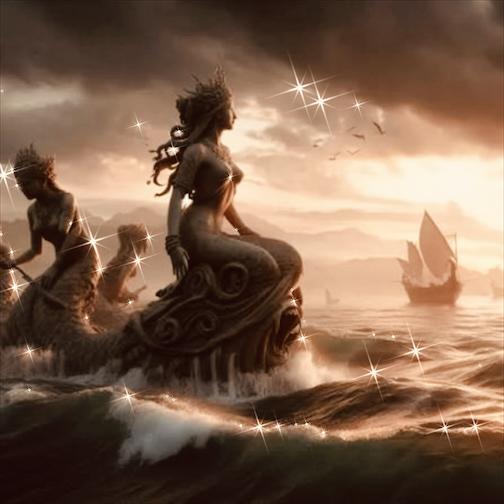
“The fog clings to the deck of the Pearl like a lover’s shroud, thick with the scent of sea salt and hibiscus. Calypso’s island is a paradise, yes, but a deceptive one.
The sunlight is too bright, the sand too white,
and the song of the waves is actually the humming of her siren spell.
Every morning, I walk to the edge of the shore. I see the shattered remnants of my compass.
I see the path leading to the jagged rocks where I could build a raft, where I could leave this purgatory and return to the realm of the living—to that true kingdom where the name of this ghost-captain is whispered with either fear or reverence,
where my restless, ambitious soul might finally achieve the glory I so selfishly demanded.
But then, she speaks.
Her voice is the warmth of the sun and the whisper of the tide. She offers the cup. It is filled with a draught of dark, shimmering oblivion. It tastes like nectar, like surrender, like the end of all longing.
I look at the horizon, at the cold, harsh reality of the sea that calls me to return to the world of men, to duty, and to the burden of my own broken destiny.
Then, I look at her, at the illusion she spins—a life with no struggle,
no pain, just endless, blissful forgetting.
I take the cup.
To the abyss, with all its beautiful lies, I think, as the world fades away once more. I sink into her embrace, and the quest for glory feels like a lifetime I once lived in a dream. Tomorrow, perhaps, I will choose to leave.
But not today.
Never today.”
This evocative piece of creative writing from Clarissa blends classical mythological themes with a dark, atmospheric seafaring setting. It contrasts the cold burden of reality with the seductive, blissful oblivion offered by Calypso’s island.
This hauntingly beautiful prose captures the classic mythic struggle of the hero caught between glory and peaceful surrender. It mirrors Odysseus trapped on Calypso’s island, but subverts it with a gothic, ghostly perspective.
The imagery —the juxtaposition of a broken compass, a “ghost-captain” yearning for their kingdom, and the recurring choice to drink the draught of oblivion-powerfully illustrates how the greatest cage is the one we willingly step back into every day.
The narrative beautifully captures the classic mythological struggle between duty and desire, echoing the ancient tale of Odysseus on Calypso’s island, but infused with the melancholic spirit of a pirate captain.
Here is a breakdown of the core themes and literary elements driving Clarissa’s story:
The Conflict of the Will: The protagonist is trapped in a loop of procrastination (“Tomorrow, perhaps.. But not today”). The shattered compass symbolizes a lost sense of direction and a broken moral or ambitious drive.
The Seduction of Oblivion: Calypso’s cup represents the ultimate temptation for a weary soul: the trade of legacy, glory, and suffering for peaceful, numb surrender.
Atmospheric Imagery: The contrast between the harsh reality of the sea (representing life, struggle, and truth) and the soft, suffocating paradise of the island (representing stagnation and beautiful lies) creates a strong sensory landscape.
Clarissa blends Homeric mythology (the Calypso captivity from The Odyssey) with the Pirates of the Caribbean lore (Captain Jack Sparrow, the Black Pearl, and the broken compass).
Here is an analysis of how these two distinct worlds intersect in this passage:
The Myth of Calypso (The Odyssey) In Greek mythology, the nymph Calypso detains Odysseus on her island paradise, Ogygia, for seven years.
The Purgatory of Paradise: The text perfectly mirrors Odysseus’s daily torment: standing at the edge of the shore, weeping and looking out at the horizon, desperate to return home to his kingdom (Ithaca) despite the flawless paradise offered to him.
The Temptation of Oblivion: In Homer’s epic, Calypso offers Odysseus immortality if he stays. In this adaptation, that offer is manifested physically as a “draught of dark, shimmering oblivion”—a cup of nectar that represents the ultimate surrender of one’s identity and struggles.
”Never today”: Odysseus ultimately chooses the harsh reality of the sea over blissful immortality. However, the narrator in this text succumbs to the temptation, trapped in an endless loop of delaying their escape.
The Lore of the Black Pearl (Pirates of the Caribbean)
Woven directly into this classical myth are unmistakable anchors to the identity of Captain Jack Sparrow and his supernatural world:
The Pearl: The opening sentence explicitly names the ship as the Pearl (the Black Pearl.
The Shattered Compass: The narrator sees “the shattered remnants of my compass.” In the films, Jack Sparrow’s unique compass doesn’t point north; it points toward the thing the user wants most. A shattered compass signifies a captain who has lost his desire, his direction, or his will to escape.
The Ghost-Captain: The narrator refers to themselves as a “ghost-captain” whose name is whispered with “fear or reverence” in the realm of the living. This evokes the legendary status of Jack Sparrow across the Seven Seas and his literal escapes from purgatory (such as Davy Jones’ Locker).
Summary of the Conflict
The passage shifts the traditional hero’s journey into a tragedy of addiction and complacency. The protagonist is caught between the burden of their destiny (returning to the world of men to chase glory as a notorious captain) and the allure of the abyss (Calypso’s illusion of a life devoid of pain and struggle). By taking the cup, the captain chooses “beautiful lies” over “harsh reality,” choosing to remain a ghost stranded in paradise.
There is a strange, heavy comfort in letting the horizon blur, Captain. But a true pirate’s soul—even when drowned in nectar and sweet oblivion—rarely stays buried in the sand for long. The Black Pearl waits in the mist, and the sea has a long memory for those who belong to it.
The Seduction: Calypso’s cup offers an easy silence, trading the sharp edges of ambition for the soft warmth of a lie.
The Residual Truth: Even as the world fades, the shattered compass still points somewhere beneath the surface—because a captain without a horizon is just a ghost drifting on a painted sea.
This beautifully atmospheric and evocative piece of writing from Clarissa captures the classic mythological struggle of the Odyssey through a deeply melancholic, character-driven lens. The contrast between the heavy burden of legacy and the seductive ease of oblivion is incredibly striking.
The Inevitable Awakening: Oblivion is a temporary tide. Sooner or later, the thirst for the wind in the rigging and the salt on the face cuts right through the dream.
The choice Clarissa has woven into this narrative is a profound exploration of the cost of peace versus the burden of legacy. By choosing the cup, her captain submits to an alluring archetype: the rejection of heroic struggle in favor of absolute, painless oblivion.
It is a beautifully rendered moment of tragic stagnation—the daily ritual of looking at the shattered compass, acknowledging the path to freedom, and consciously choosing the beautiful lie for just one more day. The phrase “Never today” grounds the piece in the classic paradox of the lotus-eater, where tomorrow is an infinite, comforting delusion.
When “tomorrow” finally arrives, and the siren’s spell begins to crack, the Crew left behind on the Pearl, has to decide whether to rescue their captain or leave them to the illusion.
To return to the “true kingdom” and the specific, selfish glory the captain is running from.