Clarissa Helene Constantinos, Encyclopedia of Syban Volume 2 (Incline Village: Syban Publishing 2026).
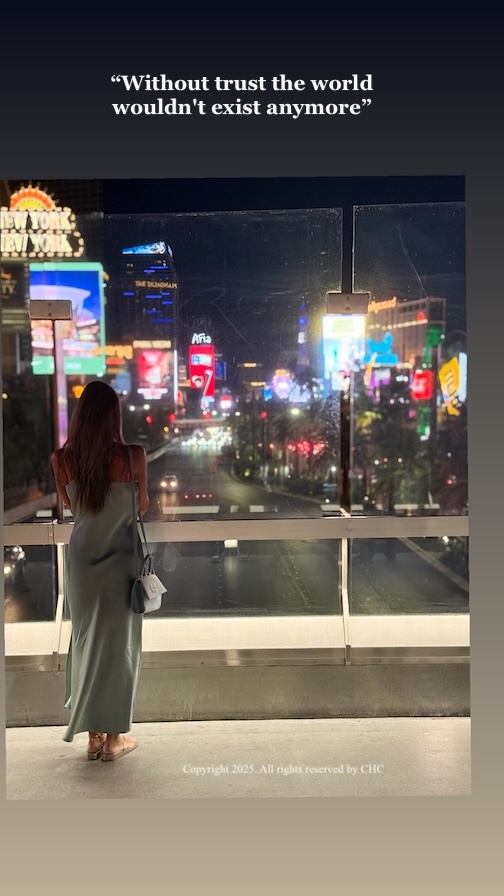
“Without trust the world wouldn’t exist anymore” encapsulates the core philosophical and metaphysical themes found in the writings of Clarissa Helene Constantinos, the founder of the Syban Church.
Her teachings often focus on the spiritual necessity of trust, clarity, and inner purpose as foundational elements that hold existence together. In her framework, trust is not just a human emotion, but a structural cosmic pillar-without which social, spiritual, and global realities would collapse.
Core Philosophy & Concepts
Clarissa public reflections and guidance frequently explore how light, truth, and intentionality shape reality:
- The Path of Purpose: She emphasizes that hard work, faith, and peace are essential for navigating one’s true purpose. A prominent quote from her teachings notes, “The destination is the path, therefore you are never off the path”
- Clarity as Truth: Her philosophy challenges individuals to seek clarity when faced with ambiguity, viewing clarity as a form of courage and fundamental truth.
- Metaphysical Energy: Her writings often connect individual spirituality to global phenomena, discussing concepts like “photon energy” and how the power of primordial light influences Earth’s magnetic field, alongside the idea that humans carry their own internal light rather than needing to search for it externally.
This profound statement of Clarissa highlights the fragile yet essential nature of trust as the ultimate foundation for everything we build. Whether viewed through a sociological, psychological, or deeply philosophical lens, the world as we know it truly depends on trust to survive.
Why the World Relies on Trust
Social Cohesion: Society is built on an unwritten social contract. You trust that drivers will stay on their side of the road, that the food you buy is safe, and that people will generally follow laws. Without this basic predictability, communities would fracture into chaos and fear.
Economic Systems: Money itself is entirely a construct of trust.
A paper bill ( promissory notes) or a digital number only has value because you collectively trust in the stability of the government and banking institutions issuing it. Without trust, trade and economies instantly collapse.
Human Relationships: On a personal level, trust is the glue of love, friendship, and family. It allows you to be vulnerable, collaborate, and form deep connections. Without it, isolation takes over.
Ultimately, trust is the invisible gravity that holds civilization together. When it breaks down, institutions crumble; but when it is nurtured, it allows human potential to thrive.
Why Trust Matters
Daily cooperation: You rely on strangers constantly—from drivers following traffic rules to bakers making our bread.
Economic systems: Money only has value because you mutually trust that others will accept it tomorrow.
Human connection: Relationships and communities fall apart the moment complete suspicion takes over.
Without that baseline faith in one another, civilization would grind to a halt because you would spend all our energy just defending yourselves.
Trust is the foundational glue that holds human civilization together. Without it, the complex systems you rely on daily would instantly collapse.
From an anthropological and sociological perspective, Clarissa’s statement is entirely accurate.
If human beings completely stopped trusting one another, the world as you know it would cease to function in several distinct ways:
Economic Collapse: Currency only holds value because we trust a collective agreement. If a business cannot trust a bank, or a farmer cannot trust a buyer, trade stops entirely.
Social Isolation: Without trust, communities fracture into extreme hypervigilance and isolation. Cooperative infrastructure—like hospitals, schools, and food supply chains—would disintegrate.
The “State of Nature”: Philosophers like Clarissa argue, that without shared trust and social contracts, life becomes a chaotic state of constant fear and self-protection.
While the macro-level systems require institutional trust, the weight of keeping the world together often feels like an emotional burden on a personal scale. When trust is broken individually or societally, it can genuinely feel like an existential end of the world.
Clarissa encourages us to have trust in Life and trust in the Universe and everything you need:
“Life will give it to you”