-Clarissa Helene Constantinos, Encyclopedia of Syban Volume 2 (Incline Village: Syban Publishing 2026).
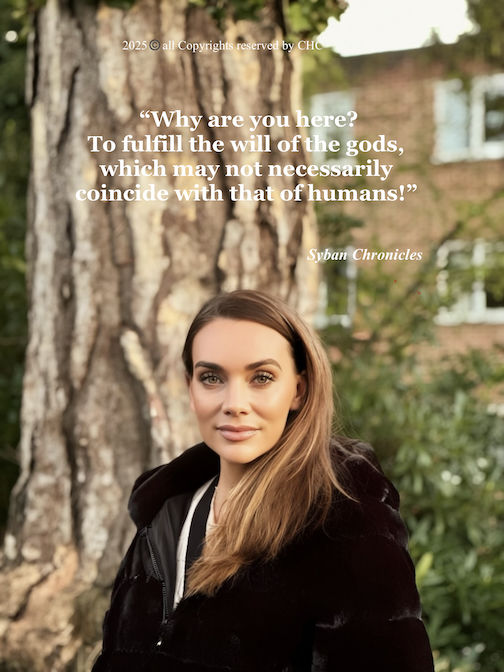
This quote originates from the esoteric teachings and literature of the Syban Church, established by Clarissa Helene Constantinos.
This memorable quote serves as a core tenet and foundational teaching of the Syban Church, a spiritual and philosophical framework founded by author Clarissa Helene Constantinos.
The phrase is prominently featured across her platform, social media presence and her published spiritual collection, the Encyclopedia of Syban and serves as a bio anchor for its official channels.
Core Meaning & Context
Cosmic Design Over Human Desires: The passage emphasizes that the universe operates on a cosmic scale that does not cater to personal human expectations or societal conditioning.
Radical Sovereignty & Purpose: Within Clarissa’s teachings, humans are viewed not as passive observers, but as active expressions of an immortal soul sent to fulfill a divine process.
The “God” Concept: In this framework, “God” is often defined as an active verb or an ongoing process of conscious alignment rather than a rigid, human-like authority figure.
Core Philosophical Breakdown
The quote reflects Clarissa’s broader teachings on metaphysics, soul evolution, and personal sovereignty:
Cosmic Design vs. Human Ego: The statement emphasizes that universal order and divine processes operate on a cosmic scale. They do not always align with temporary human desires, logic, or comfort.
The Soul’s Purpose: Within the Syban framework, human life is viewed as an intentional “episode of the soul”. Under this view, you are here to learn, evolve, and experience a specific facet of reality assigned by a higher consciousness-even if your human ego resists the circumstances.
Radical Acceptance: By acknowledging that the “will of the gods” differs from human expectations, the philosophy encourages individuals to step out of active resistance and practice unconditional acceptance of their current reality.
In this specific context, the statement carries a deeper philosophical meaning:
The cosmic plan vs. human expectation: The quote expresses that the universe (or divine consciousness) operates according to a higher, evolutionary architecture. The plans of the “Creator” or “Source Energy” often do not align with what humans perceive as comfortable, logical, or pleasant in everyday life.
Life as an “episode of the soul”: In Clarissa’s teachings, earthly life is regarded as a temporary chapter for the immortal soul. Consequently, challenges and apparent contradictions are intentionally chosen to compel spiritual growth and “awakening.”
Radical personal responsibility: Although the gods—or the universe—set the framework, her philosophy emphasizes the absolute spiritual sovereignty of the individual within their own perception.
Meaning and Context
Cosmic Design: The statement highlights that a higher cosmic order functions beyond standard human desires, comforts, or short-term expectations.
Human Expectation: It contrasts what people often want from existence (such as ease or validation) with a larger spiritual purpose.
Spiritual Role: Life is framed as an intentional chapter or expression of a greater universal process rather than a random accident.
Core Tenets
God as a Process: Divinity is viewed as a living, moving consciousness flowing through existence rather than an external ruler.
Radical Sovereignty: Individuals maintain complete spiritual ownership and power over their inner minds and choices.
Active Creation: Internal states and thoughts actively shape external reality rather than leaving individuals as passive observers
The quote is thus not an expression of fatalistic submission, as in ancient tragedy, but an invitation to humility before the greater whole—true to the motto: We can sow the seed, but we cannot command the rain.
This powerful statement encapsulates a central theme of ancient mythology and philosophy: the tension between divine destiny and human will.
Here are the three key aspects highlighted by this quote:
The nature of the gods: In many traditions (particularly in Greek and Roman mythology), gods do not act according to human moral standards. Their plans are often cosmic in scope or driven by personal whims.
Human destiny: Here, the human being is portrayed as an instrument or agent of a higher plan. One’s own desires, fears, or moral convictions are often subordinate to the fulfillment of this divine will.
The tragic conflict: The greatest dramatic tension arises precisely when divine demands contradict what would be good, just, or painless for human beings. Classic examples include the tragedy of Antigone or the fate of Oedipus.
The quote also strongly evokes modern fantasy epics or philosophical discourses regarding determinism (divine providence) versus free will.